

World Cup Preview: #18 Austria
Previewing Austria's chances at the World Cup

Continuing my preview of the 48 World Cup teams today, we are taking a deeper look at Austria.
This is the eighth appearance for Austria at the World Cup, but it’s been a long time since they’ve been here. The last time Austria was on this stage was in 1998. Ralf Rangnick has revitalized the Austrian National team over the last couple of years, especially after they topped their Euro group ahead of France and the Netherlands. Can they do the same this summer in a group with the defending champions, Argentina?
For those who do not know, I have my own International Ratings, which I have built over the years, and you can find them here.
At the end of this series, I will post my final rankings before the World Cup begins. In addition, I will be simulating the World Cup, which will likely be released the week before the tournament starts.
I will go in reverse order of my rankings, starting with my lowest-rated team and working up to my top-ranked team.
This will simply be a breakdown of each team. I will save my analysis for how they match up with each team for my group previews, which will come out a little closer to the week of the World Cup.
In case you missed it, check out my previous previews:
How did they get here?
UEFA World Cup qualifying is split into two rounds. In the first round, all European countries are divided into 12 groups, with the winners of each group automatically qualifying for the World Cup.
The second round playoffs consisted of the twelve group runners-up and the best four Nations League group winners, based on the Nations League interim overall ranking, who finished outside the top two of their qualifying group.
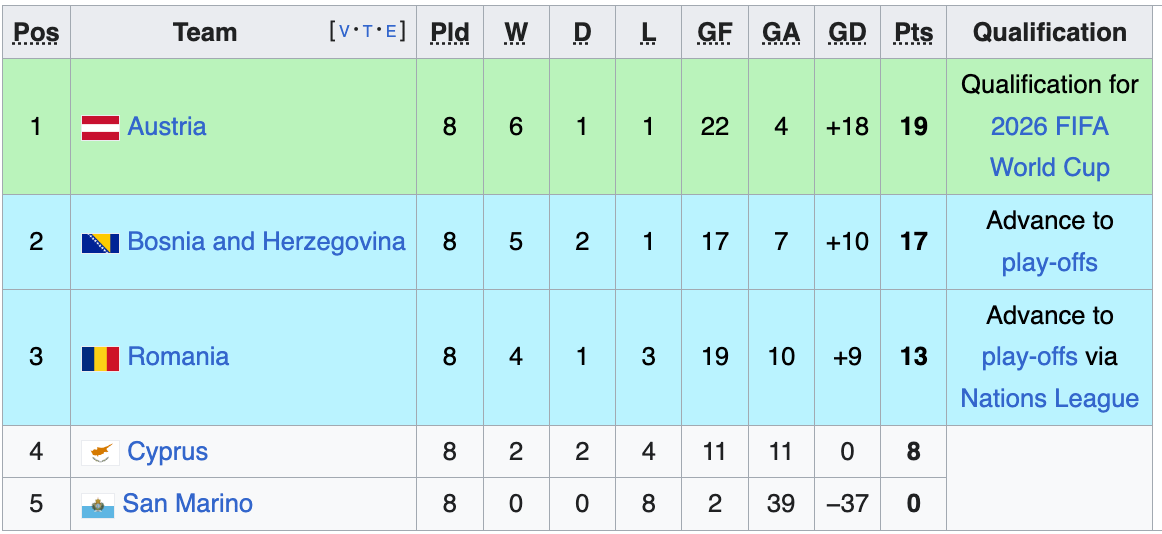
Austria were highly impressive, winning six of their eight matches, outscoring their opponents 22 to 4 to top the group by two points over Bosnia and Herzegovina.
Austria Stats
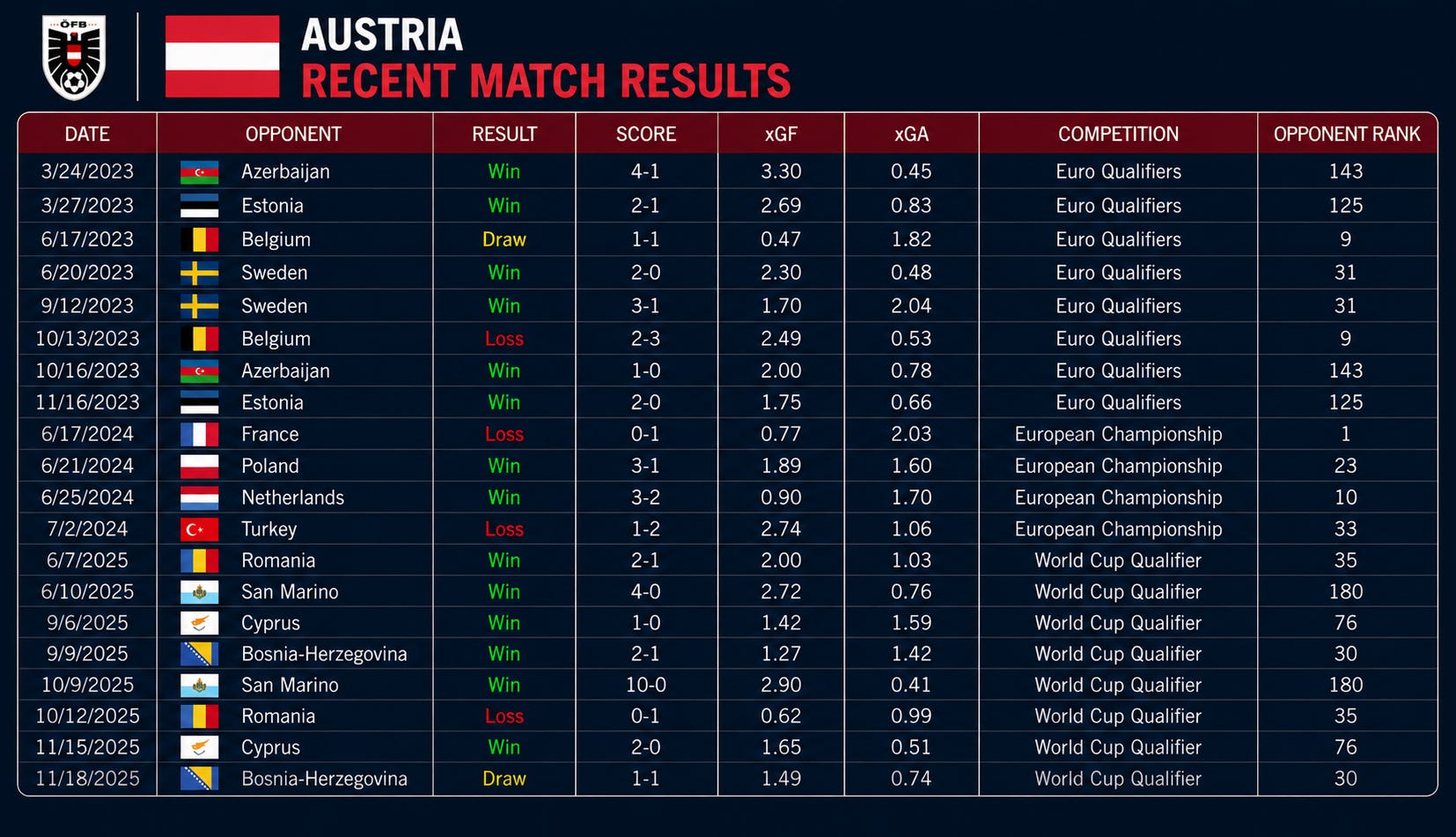
All data is from Footystats.org
Austria had a very impressive qualifying campaign, but it was aided by a couple of blowouts against San Mario. In their other six matches against Bosnia and Herzegovina, Cyprus, and Romania, they had only a +2.17 xGD.
With that being said, the numbers for Ralf Rangnick’s side all hinge on how effective their press is.
During qualifying, Austria (along with Spain) led all European teams in winning possession in the final third.
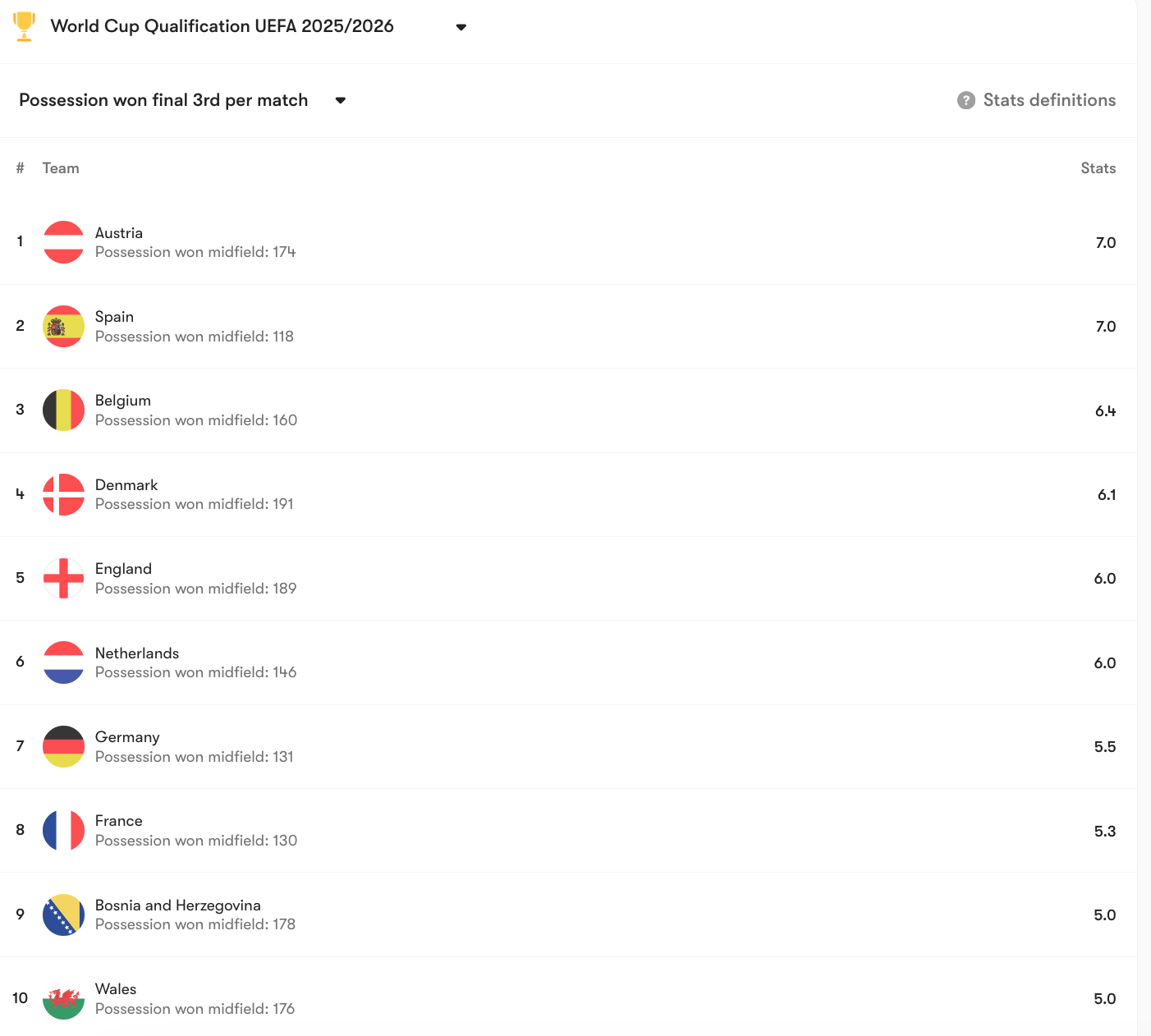
image via FotMob
Their press drives not only many of their defensive numbers but also their offensive numbers.
What it does is not only allow Austria to create easy transition opportunities but also tilt the field on their opponents by constantly winning the ball in their third.
Austria averaged 64.2% possession during qualifying, the sixth-highest in Europe, highlighting how they are evolving tactically under Rangnick.
Austria Key Players
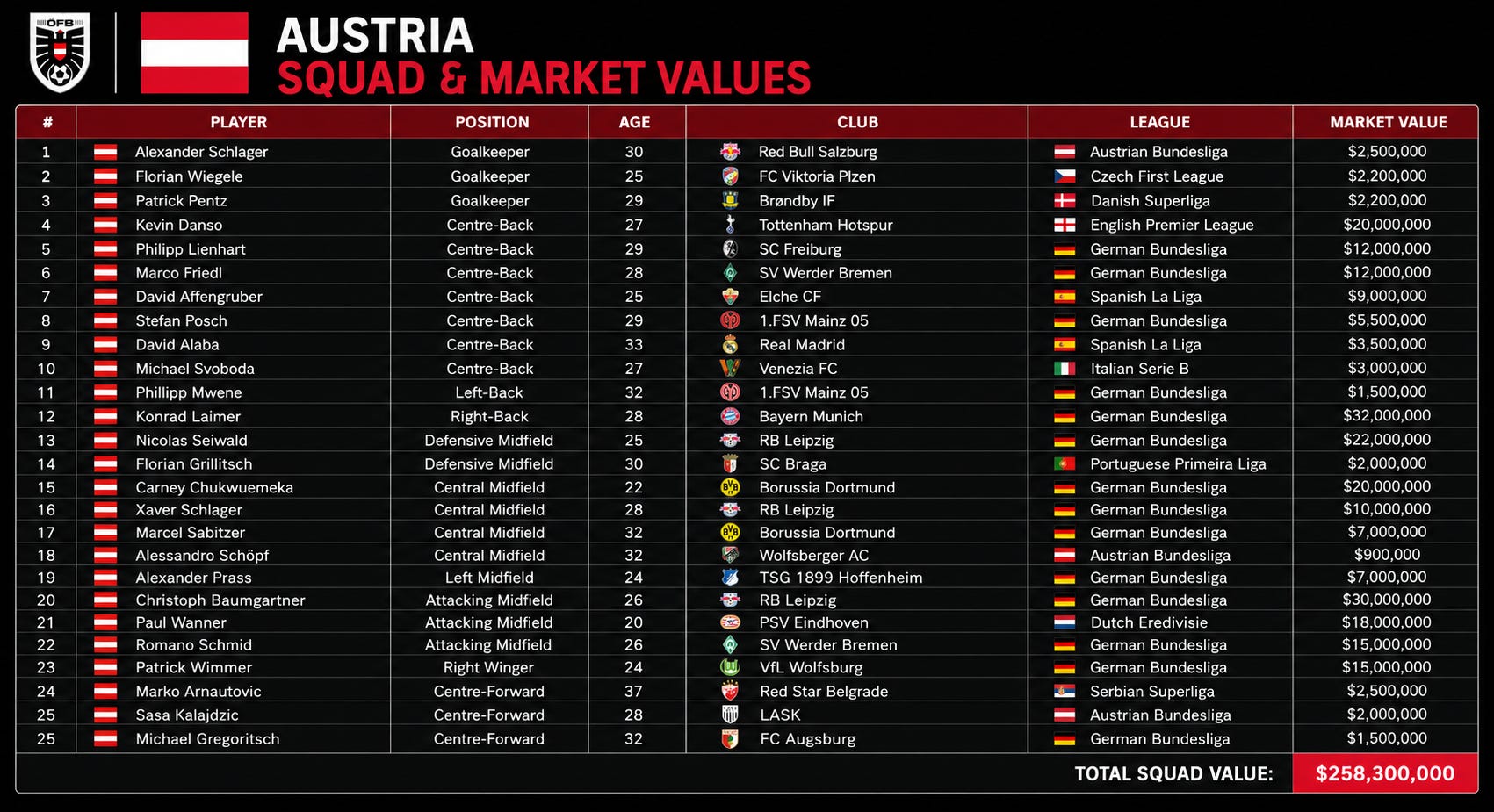
All data is from transfermarkt.com
Note: This is the projected roster, not the official one.
Austria has one heck of a midfield that can really compete with any team in the world. They recently switched Carney Chukwuemeka's allegiance from England. He was a mainstay in the Dortmund midfield this season and fits so well with Ralf Rangnick’s system.
He was the best central midfielder at winning duels and as a progressive passer.
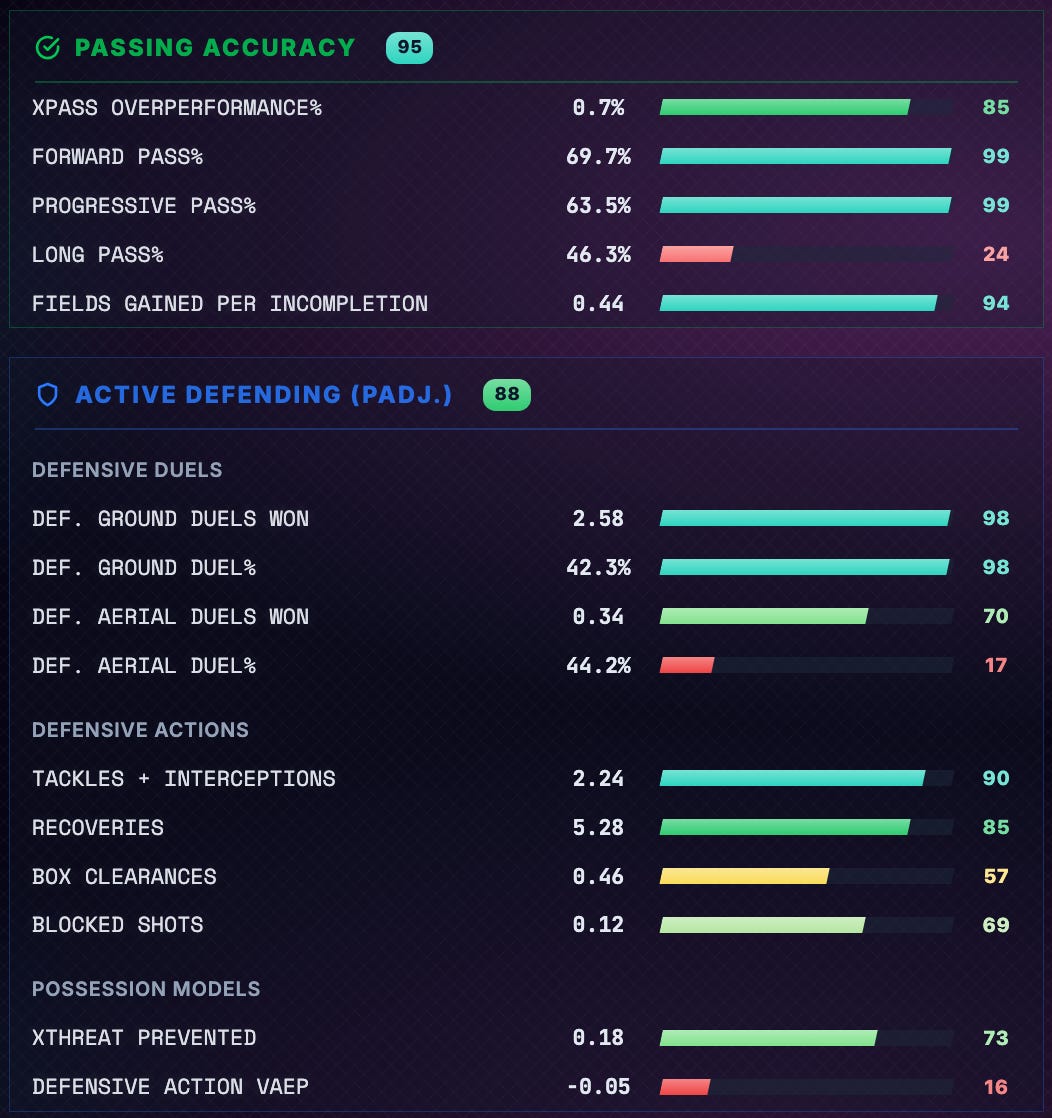
image via Scout Lab
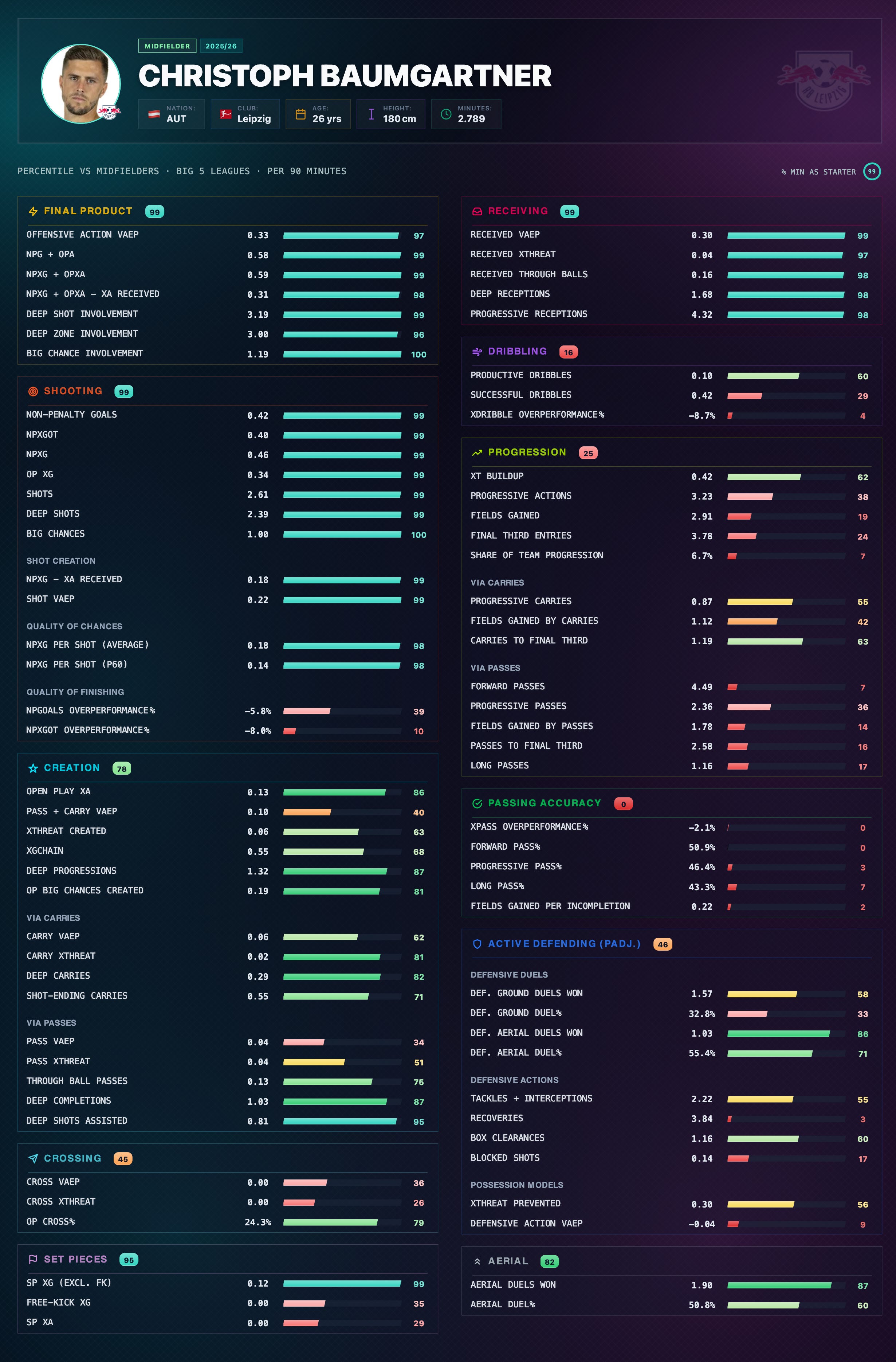
The striking options up top are a bit of an issue for Austria, but they do have many talented attacking midfielders, led by Christoph Baumgartner.
He’s been one of Austria’s best players for a long time and is coming off the best club season of his career, scoring 13 goals and dishing out eight assists for RB Leipzig.
He was one of the best attacking midfielders in the Bundesliga this season, putting up insane shooting numbers.
Austria Tactics
When you watch Austria, they play some beautiful football. It is free-flowing, there are a lot of positional rotations, and they play quick one-touch passes right through a low block that makes you think you are watching Spain.
They were forced to play this way during qualifying because they are really good in transition, but everyone knew that, so they did not want to leave themselves exposed, which is the main reason why Austria held such a high amount of possession.
Rangnick is a really good tactical manager because he is really versatile. Austria will typically build up with a single pivot in the midfield to try to overload the opponent’s back line.
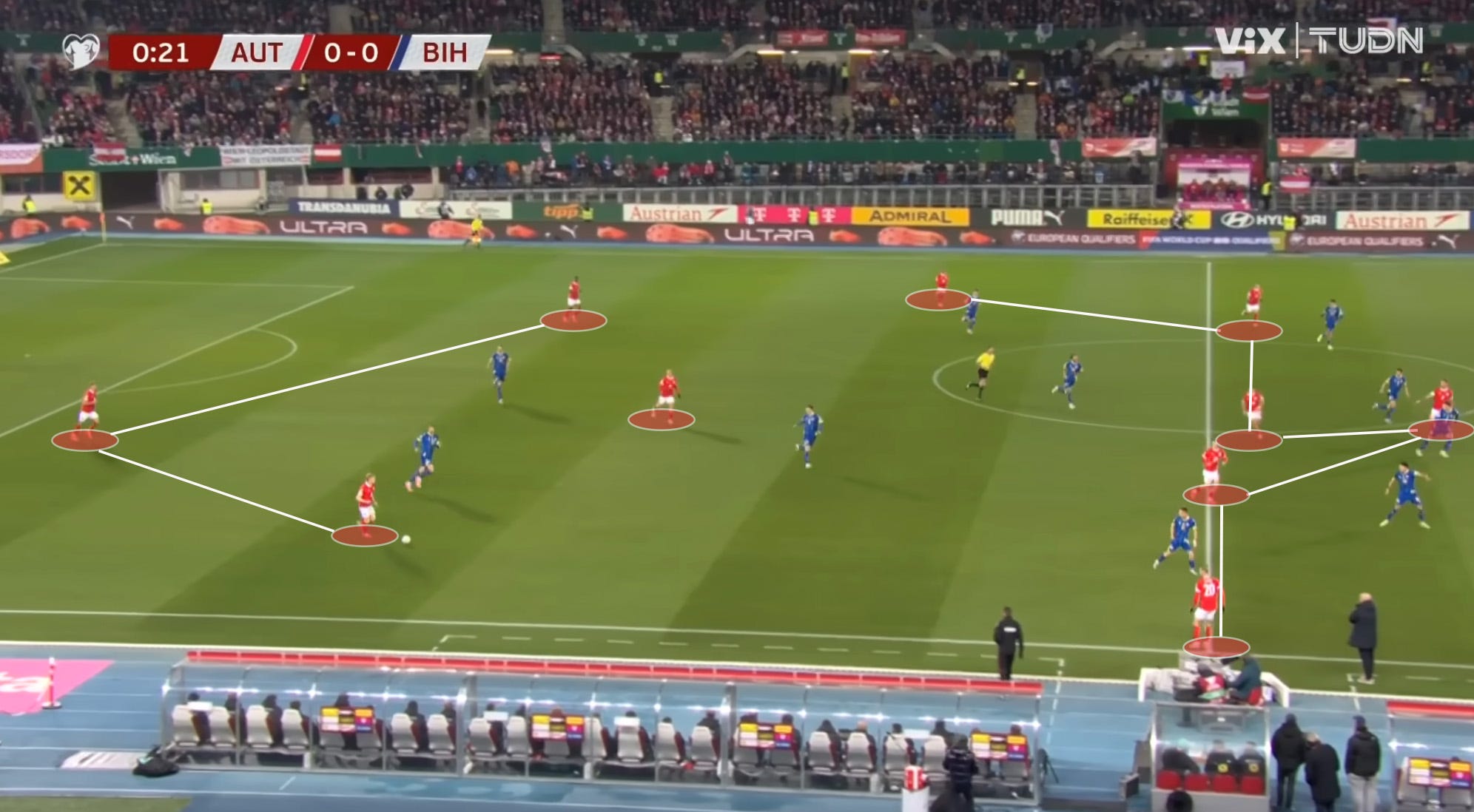
From this, their forwards can all drop into pockets of space or easily play direct balls over the top.
When they reach the final third, they will overload any part of the pitch where they believe they can exploit the opposition.
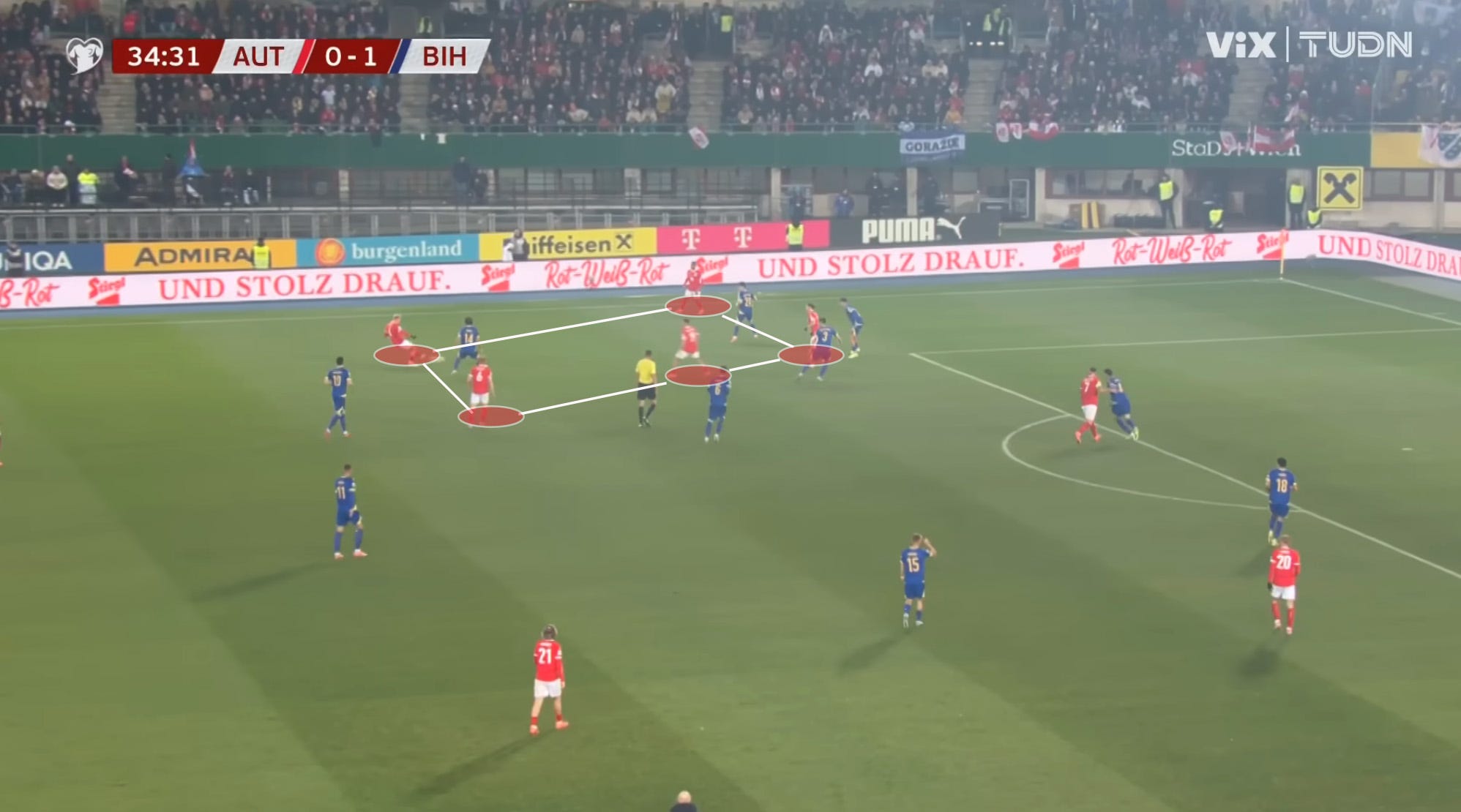
When they do get these overloads, they are not like Arsenal, for example, and are very conservative with their passing. They are as aggressive as I’ve seen at the international level in trying to aggressively play through opponents.
This sequence against Bosnia and Herzegovina is a good example of that, where two quick passes open up a shot at the top of the 18-yard box for Konrad Laimer.
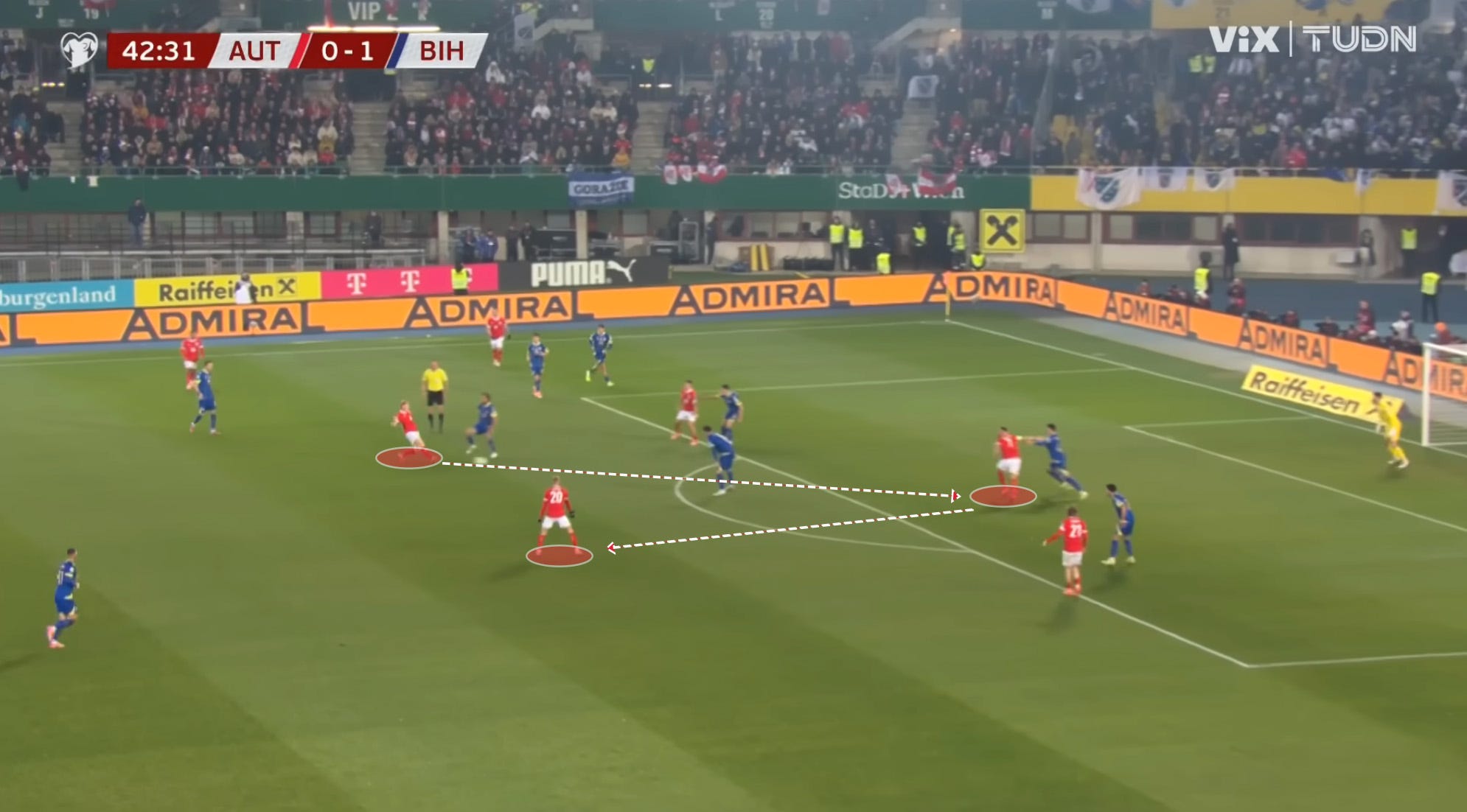
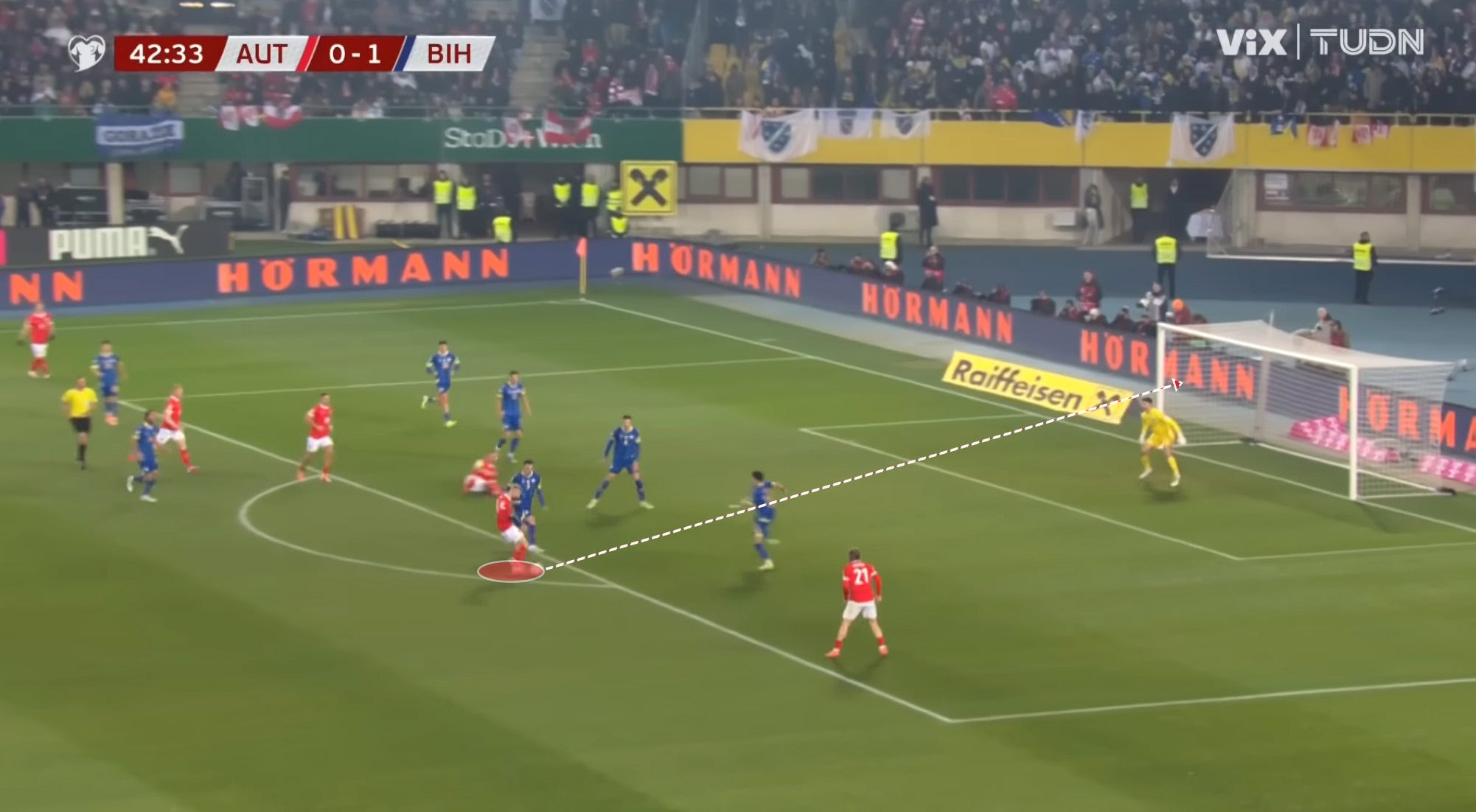
They are so aggressive because their counter-press is so good. The reward is far greater than the risk, Rangnick’s eyes, and it’s what makes Austria so difficult to play against.
Typically, Austria uses a hybrid press: they initially line up in a 4-4-2, and then, once the ball goes wide, they jump into a man-to-man press like this against Romania.
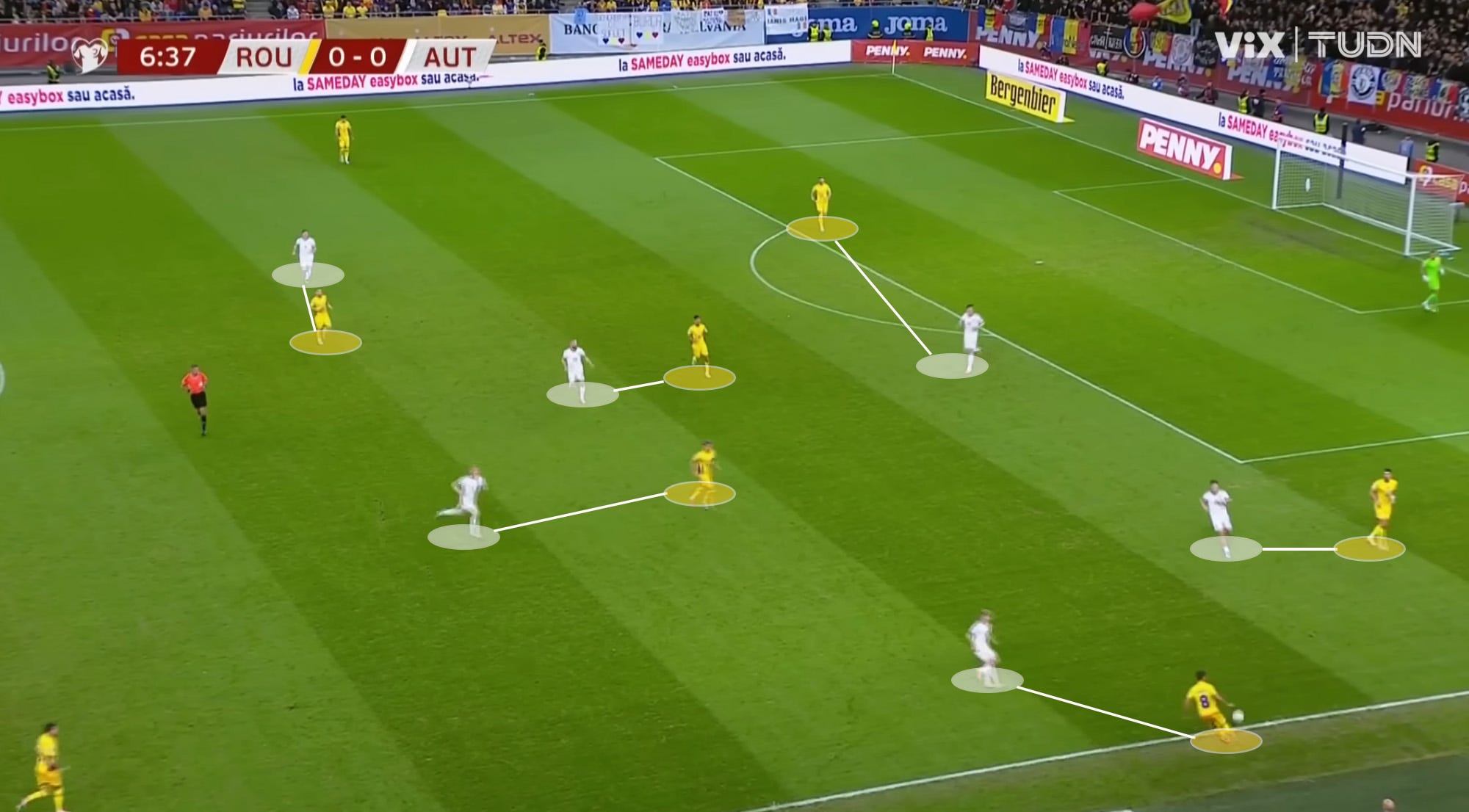
Austria has a pretty easy route out of the group, and they are going to be a pain to play against for any team in this World Cup.