

World Cup Preview: #19 Morocco
Previewing Morocco's chances at the World Cup

Continuing my preview of the 48 World Cup teams today, we are taking a deeper look at Morocco.
Morocco shocked the world at the last World Cup, making it all the way to the semifinals, beating two of the best teams in the world, Spain and Portugal, along the way. Since the 2022 World Cup, they have been dominating African qualifying, but have come up short in the last two Africa Cup of Nations. They have loads of talent, but some uncertainty in the dugout that may hinder them at this tournament.
For those who do not know, I have my own International Ratings, which I have built over the years, and you can find them here.
At the end of this series, I will post my final rankings before the World Cup begins. In addition, I will be simulating the World Cup, which will likely be released the week before the tournament starts.
I will go in reverse order of my rankings, starting with my lowest-rated team and working up to my top-ranked team.
This will simply be a breakdown of each team. I will save my analysis for how they match up with each team for my group previews, which will come out a little closer to the week of the World Cup.
In case you missed it, check out my previous previews:
How did they get here?
African World Cup qualifying is really difficult. All countries are split into groups of six, with the top team in each group automatically qualifying for the World Cup and the top four second-place teams advancing to a second-round playoff.
Morocco was perfect in one of the easier World Cup qualifying groups that was filled with off-the-field issues. Eritrea withdrew before the qualifiers started, the Congo had issues with their FA that forced them to forfeit a few matches, but Morocco won all eight of their matches and outscored their opponents 22-2.
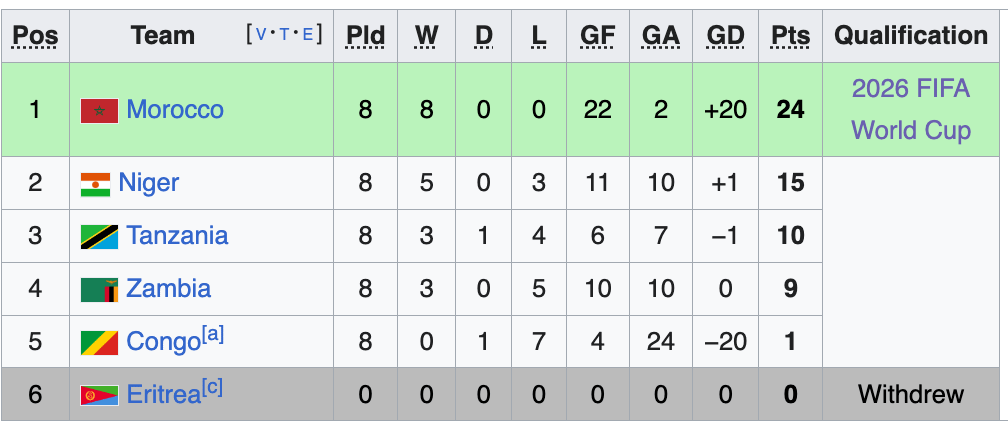
Morocco Stats
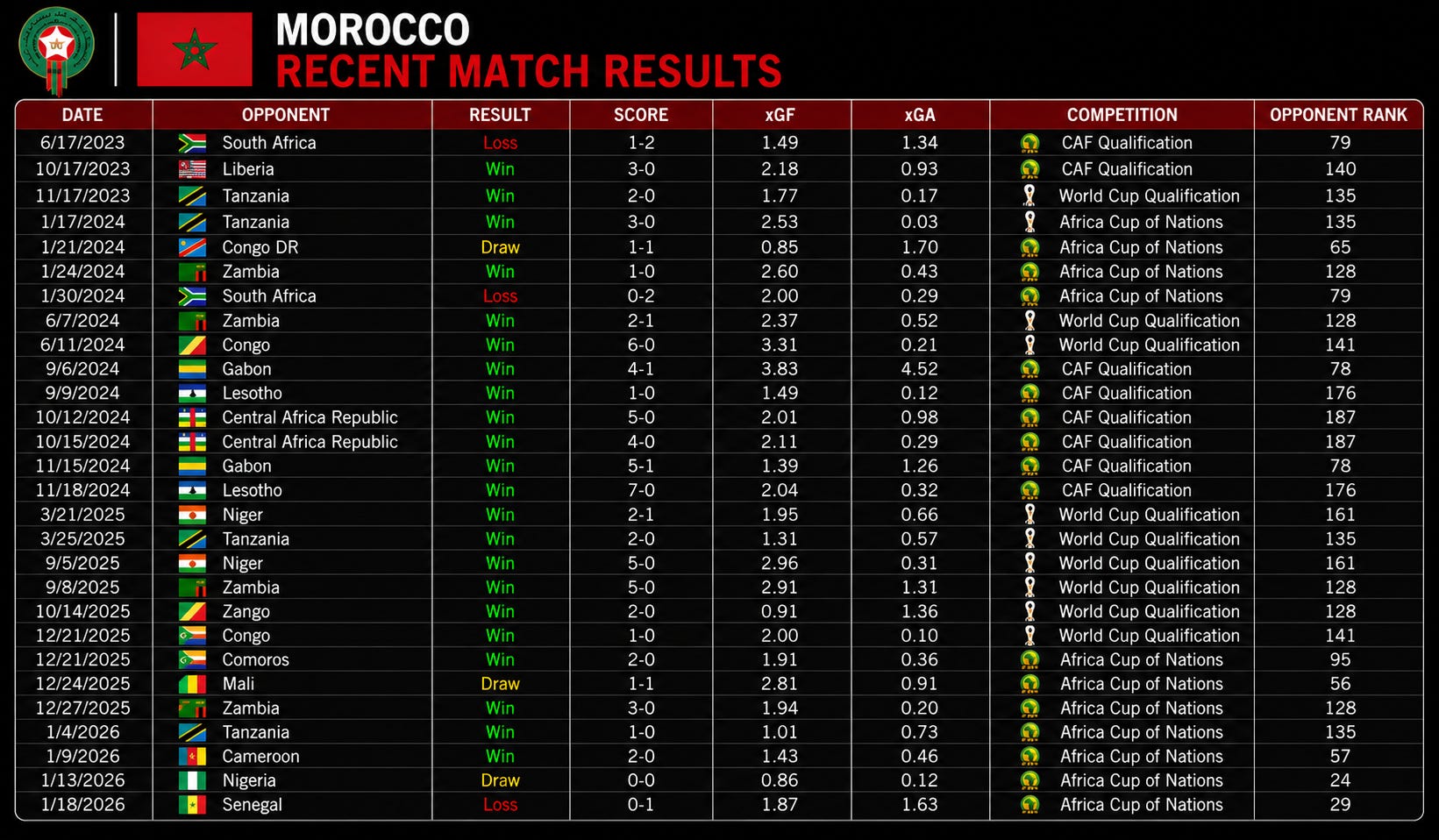
All data is from Footystats.org
Morocco obviously dominated everyone in their World Cup qualifying group. They finished with a +12.69 xGD and averaged 2.07 xG per 90 minutes. However, I would say that their AFCON matches this winter are far more relevant than what happened in World Cup qualifying.
When you look at Morocco’s stats from AFCON, they really weren’t that dominant. First off, of the nine goals they scored at the tournament, four of them came from set pieces. Also, they were awarded three penalties along the way.
They also weren’t near the top of the tournament in terms of possession, accurate passes, or even expected goals.
When you dive into all of their individual matches, you’ll find that they actually weren’t that great from open play and were pretty reliant on set pieces.
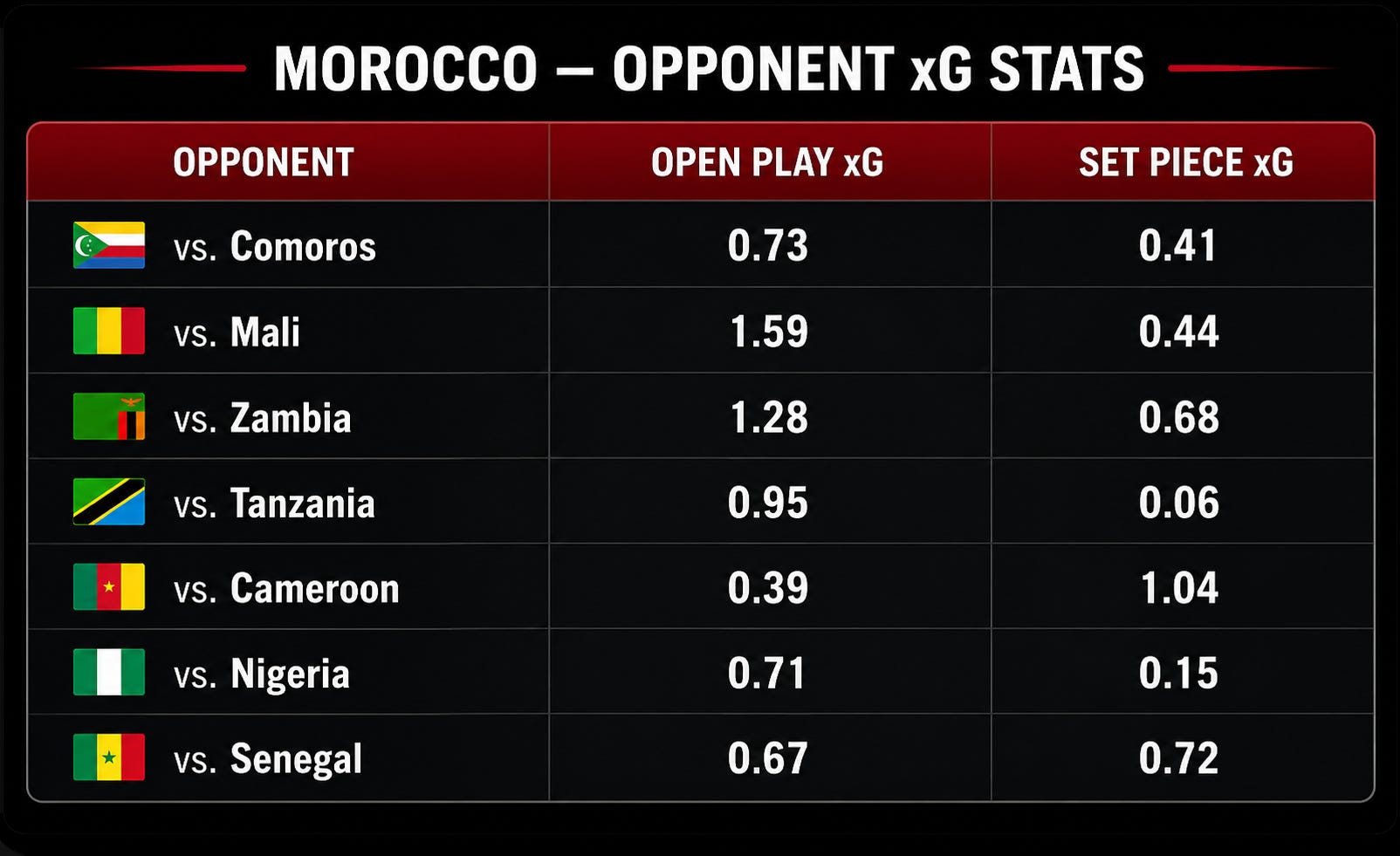
All data is from FotMob
While their AFCON run wasn’t as dominant as most people think, Senegal is the only team they’ve played since the 2023 Africa Cup of Nations that is at this World Cup.
Based on my rankings, their average opponent rank is 117. In addition, they have had a new manager for only three months, so there are a lot of question marks about Morocco coming into this World Cup.
Morocco Key Players
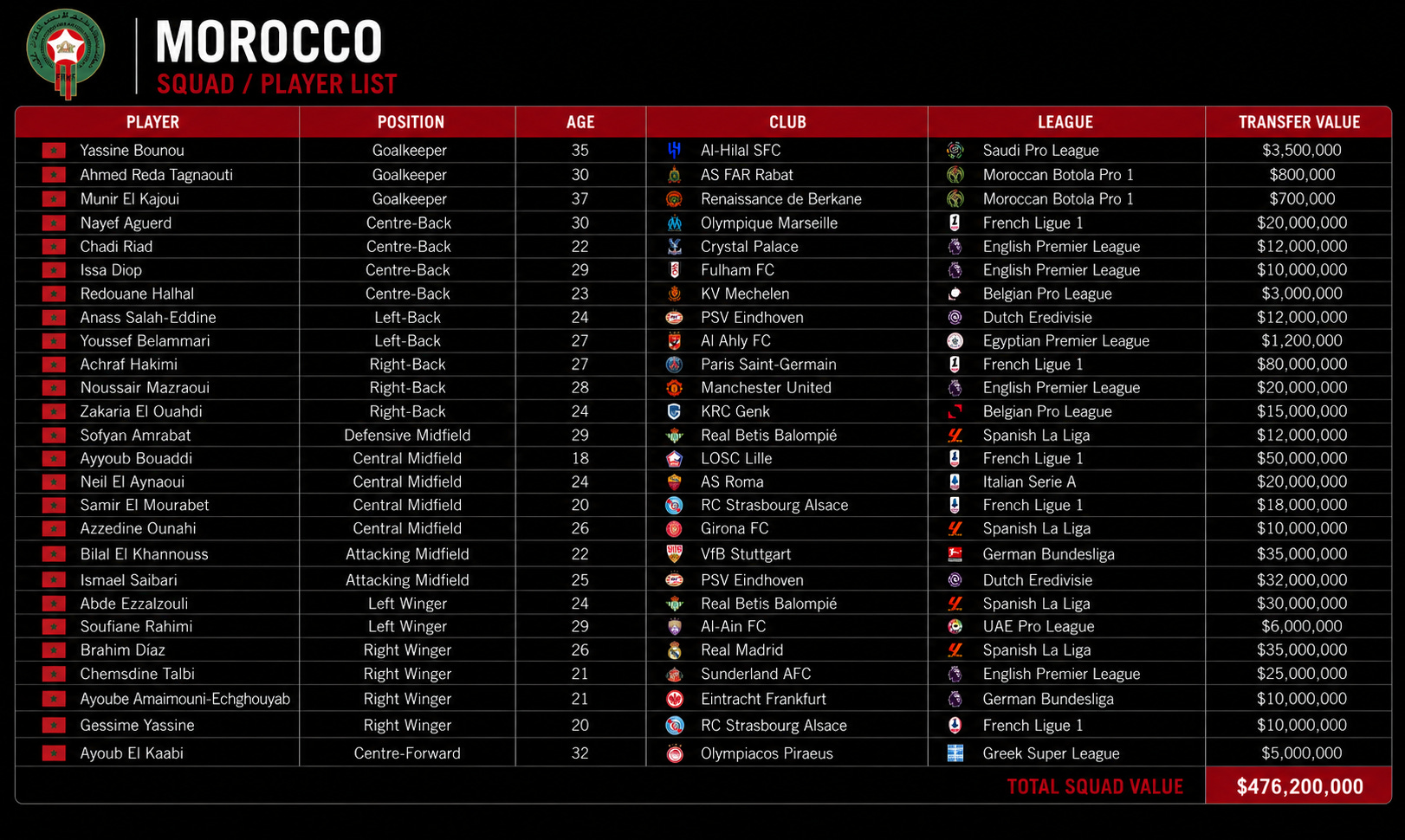
All data is from transfermarkt.com
Morocco is the most talented team in Africa, with some players playing at the highest level of football.
Their attack runs through Brahim Diaz, who was instrumental in their run to the final at AFCON this winter. He led the tournament with five goals, was second in xG on target, and second to Victor Osimhen in total expected goals created.
This season, he found it difficult to get into the Real Madrid starting XI. When he did, his numbers were above average, but nowhere near elite.
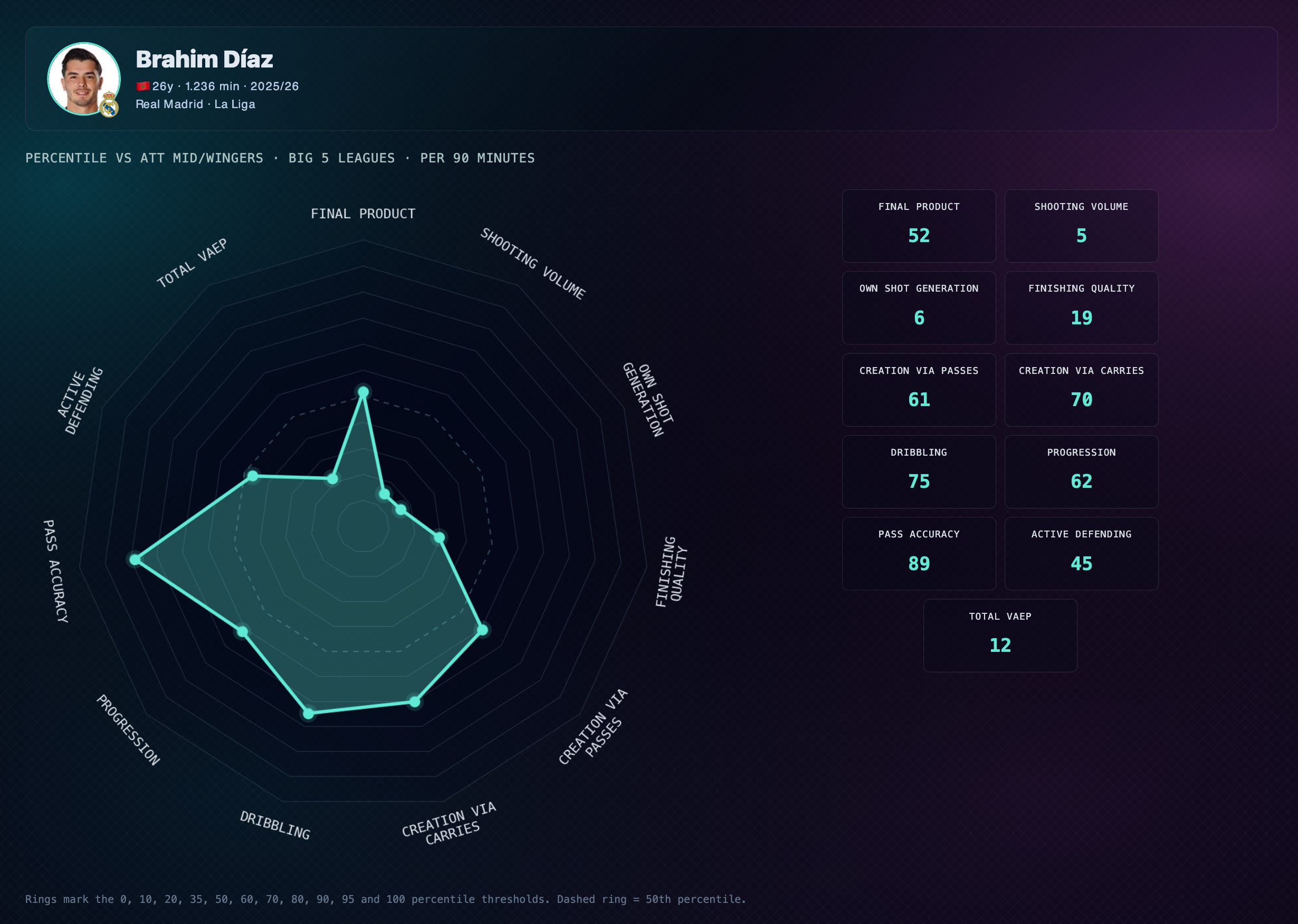
image via Scout Lab
The other obvious key to Morocco’s attack and their progression from the back is Achraf Hakimi. He has been instrumental for PSG for a number of years at right back, and a majority of Morocco’s attacks come down the right-hand side of the pitch because of his elite chance creation ability.
He led Morocco in assists during World Cup qualifying and also tied Michael Olise for the most assists in the Champions League this year.
Morocco Tactics
Morocco has gone through some turmoil since the Africa Cup of Nations final. Their long-time manager, Walid Regragui, stepped down after the tournament, but Morocco made an internal hire, promoting Mohamed Ouahbi from the Morocco U23 team to the National team.
Ouahbi is more than likely going to be out of his element, considering he’s only managed at the youth level throughout his career. However, because Morocco made an internal hire so close to the World Cup, I don’t think you’ll see a major tactical change from what we saw at the Africa Cup of Nations.
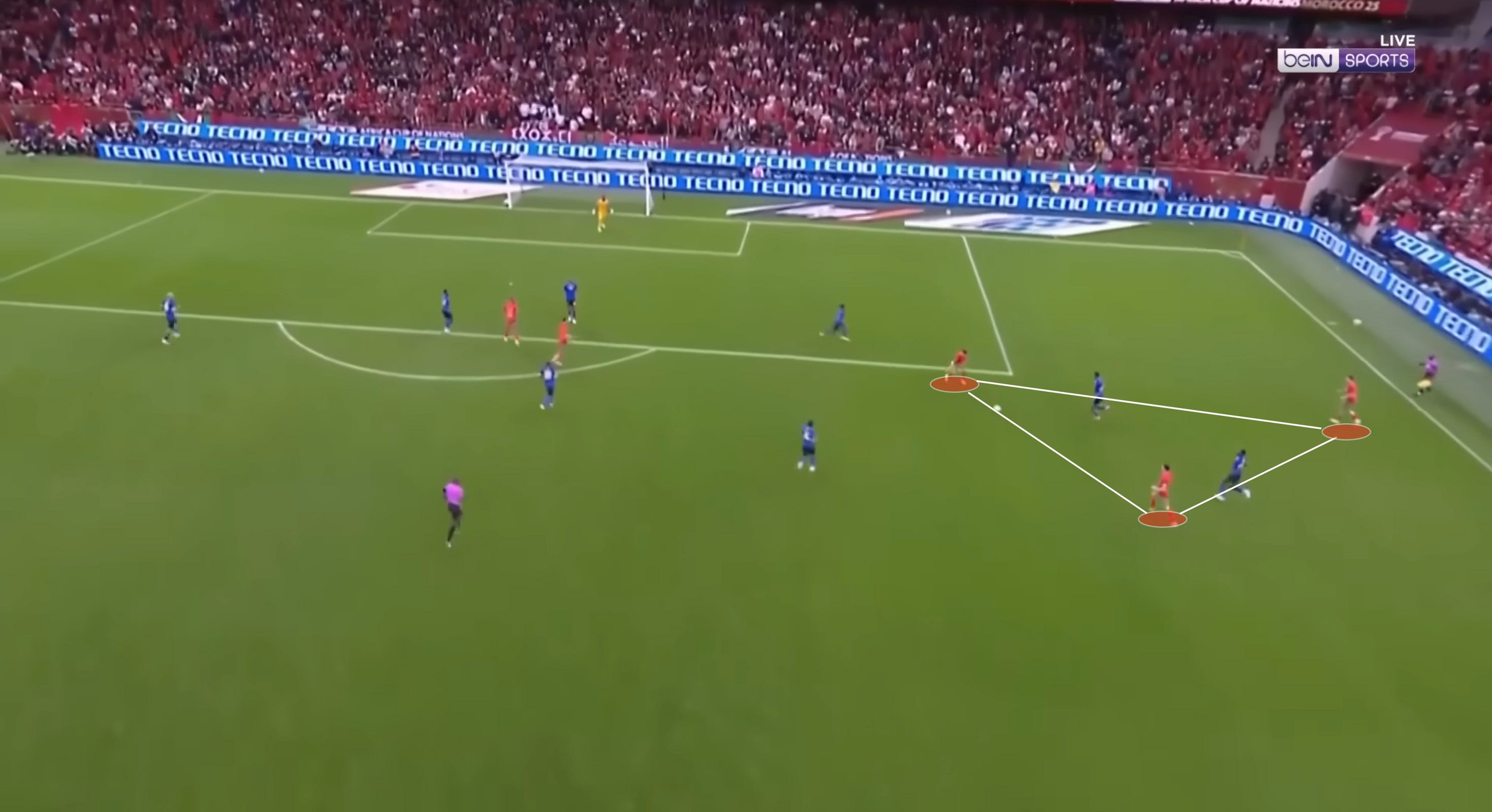
What has tended to happen for Morocco in Africa is that when they are unable to play through the middle, they create passing triangles out wide to try and send crosses into the box.
You can see here, against Tanzania, Hakimi is hugging the touchline, and Diaz is operating in the half-space. Diaz was able to beat his man 1 v 1 and score on the near post for their lone goal.
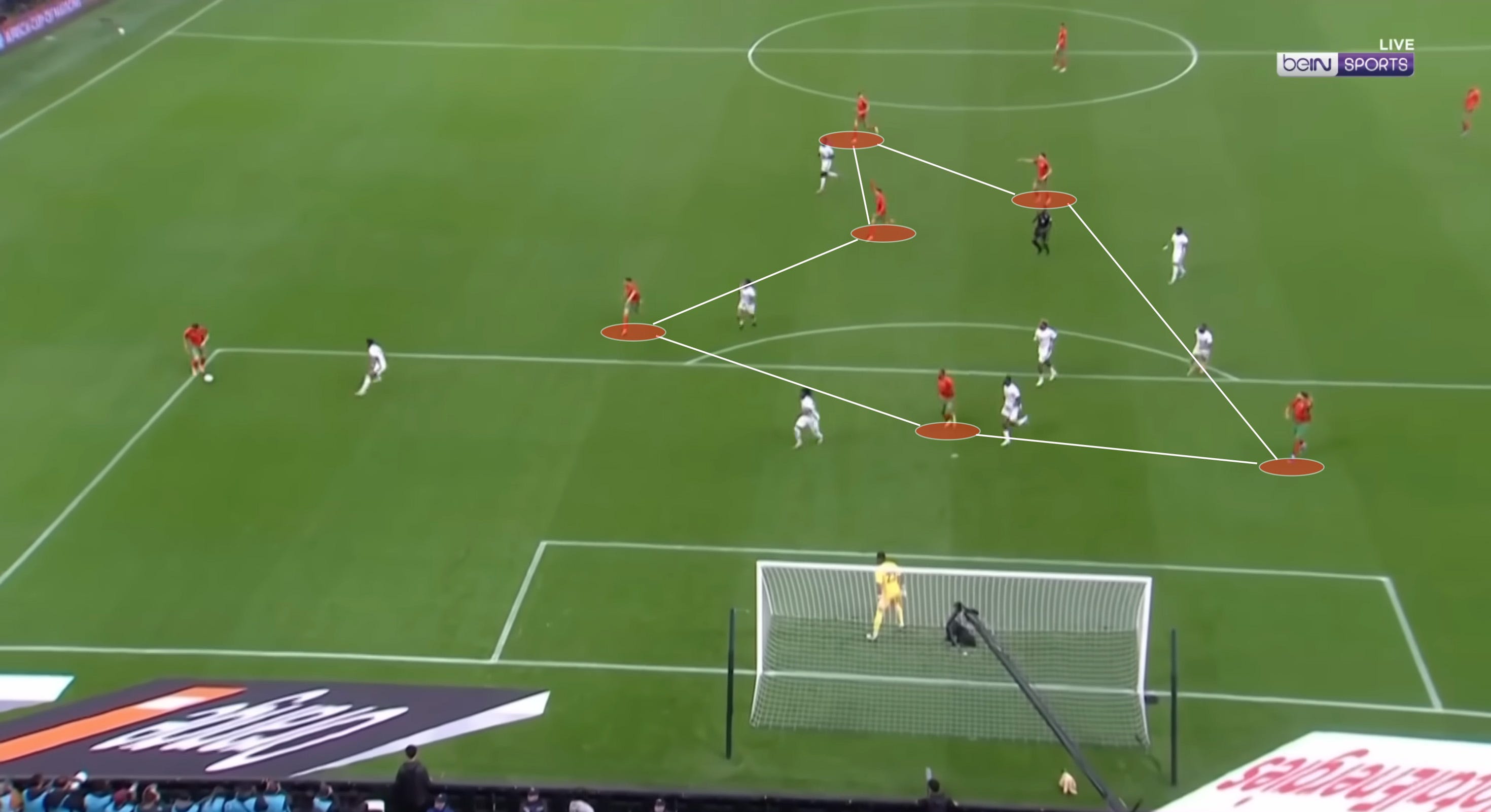
When Morocco does build up, though, it is typically very narrow. You can see from a couple of examples here that their wingers are typically tucked into the half space, and what they are really trying to do is get them 1 v 1 against the opposing fullback.
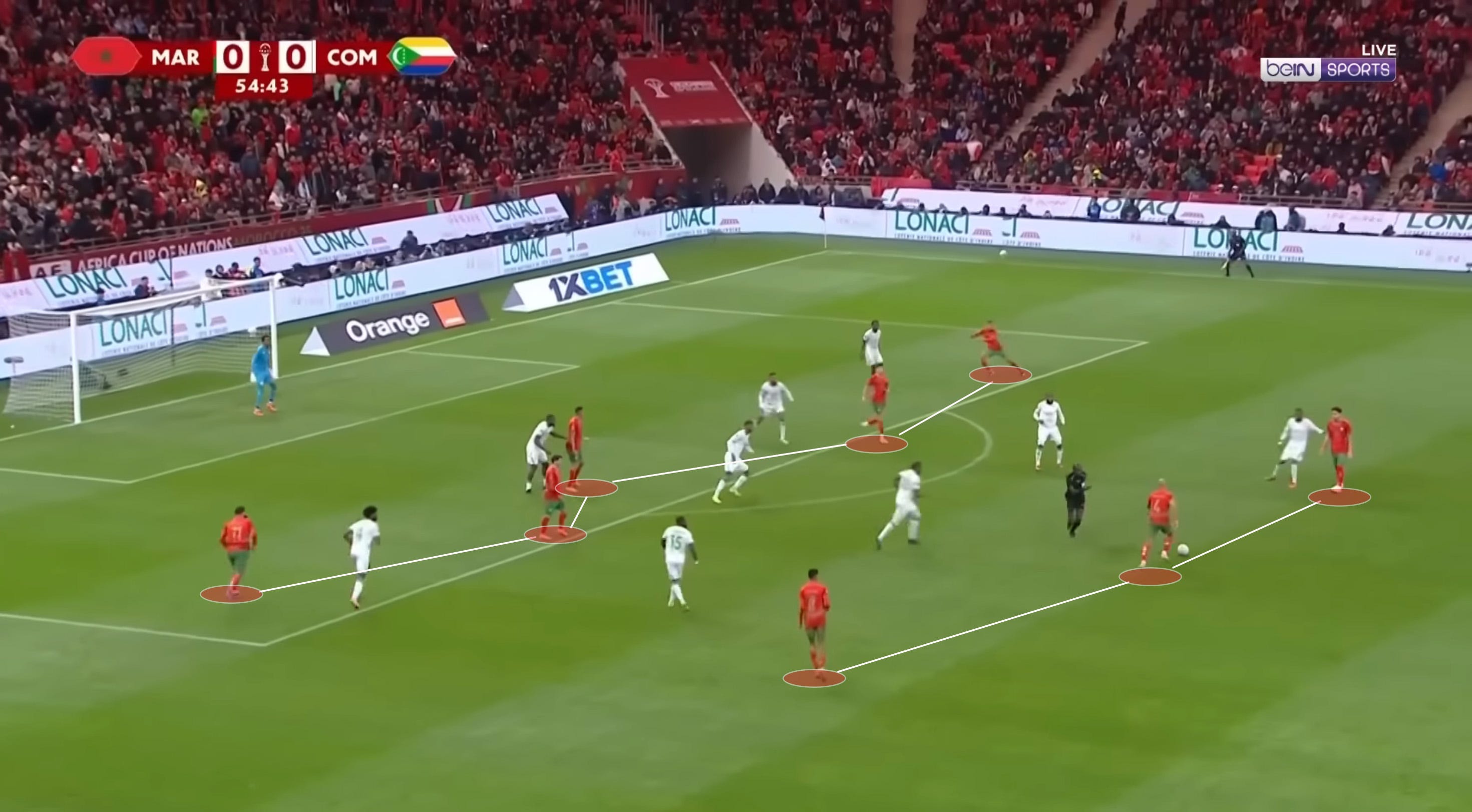
Once they reach the final third, it is typically a 2-3-5 shape, with the main emphasis on overloading the opposition on their back line. Typically in Africa, even when teams defend in a back five, Morocco is much more talented and can win 1 v 1 matchups.
That is not going to be the case at the World Cup, and they really haven’t been in a position where they’ve had to play low block counter-attacking football as they did in their run to the semifinals in Qatar.
With a new manager and some questionable performances against the better teams in Africa, I would be hesitant to say Morocco could make a deep run as they did at the last tournament.