

Champions League Final Tactical Review
Reviewing the tactics between Luis Enrique and Mikel Arteta

Arsenal was looking for revenge against PSG from last year’s semi-final in Budapest on Saturday.
The Gunners were looking to win their first-ever European trophy, while PSG were looking to defend their title.
It turned out to be a very tight, cagey final, with honestly not a lot of tactical nuance. Arsenal used their early lead to change their tactics, and for most of the match, PSG had no answer.
A second-half penalty tied things up, and both teams struggled to create chances, which ultimately led to a penalty shootout.
PSG ended up winning in the end, but Mikel Arteta and Arsenal put on a masterclass of low-block defending. They frustrated PSG for a full 120 minutes and deserve a lot of credit for how hard they worked to get this match to penalties.
Today, we will take a look at the tactical battle between Mikel Arteta and Luis Enrique.
Let’s dive in.
First Half
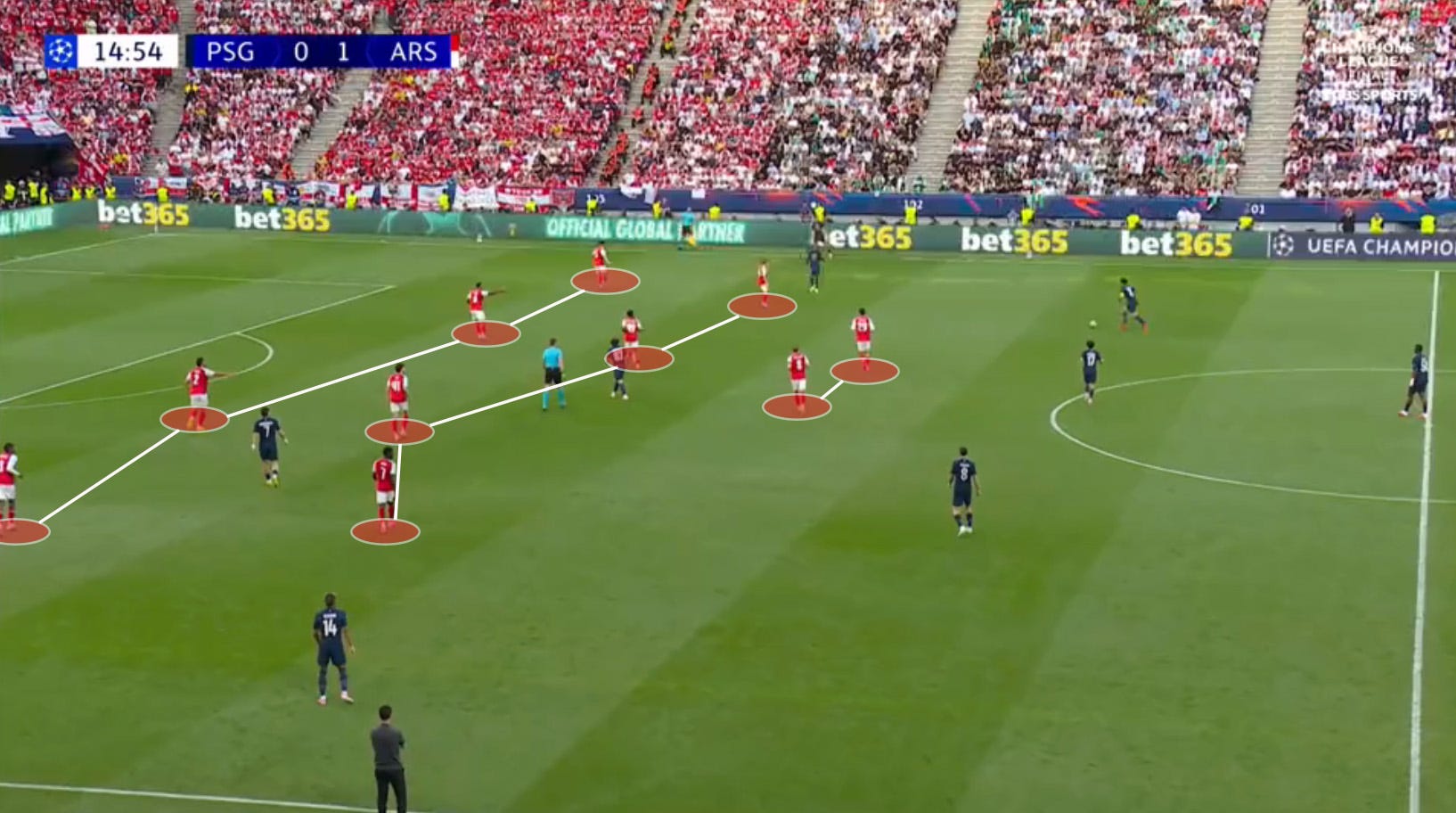
2:48- Even before the opening goal, Arsenal weren’t trying to press PSG high up the pitch. PSG was definitely trying to bait them into pressing, but Arsenal sat in a well-structured 4-2-4 that they switched during the second half of the season.
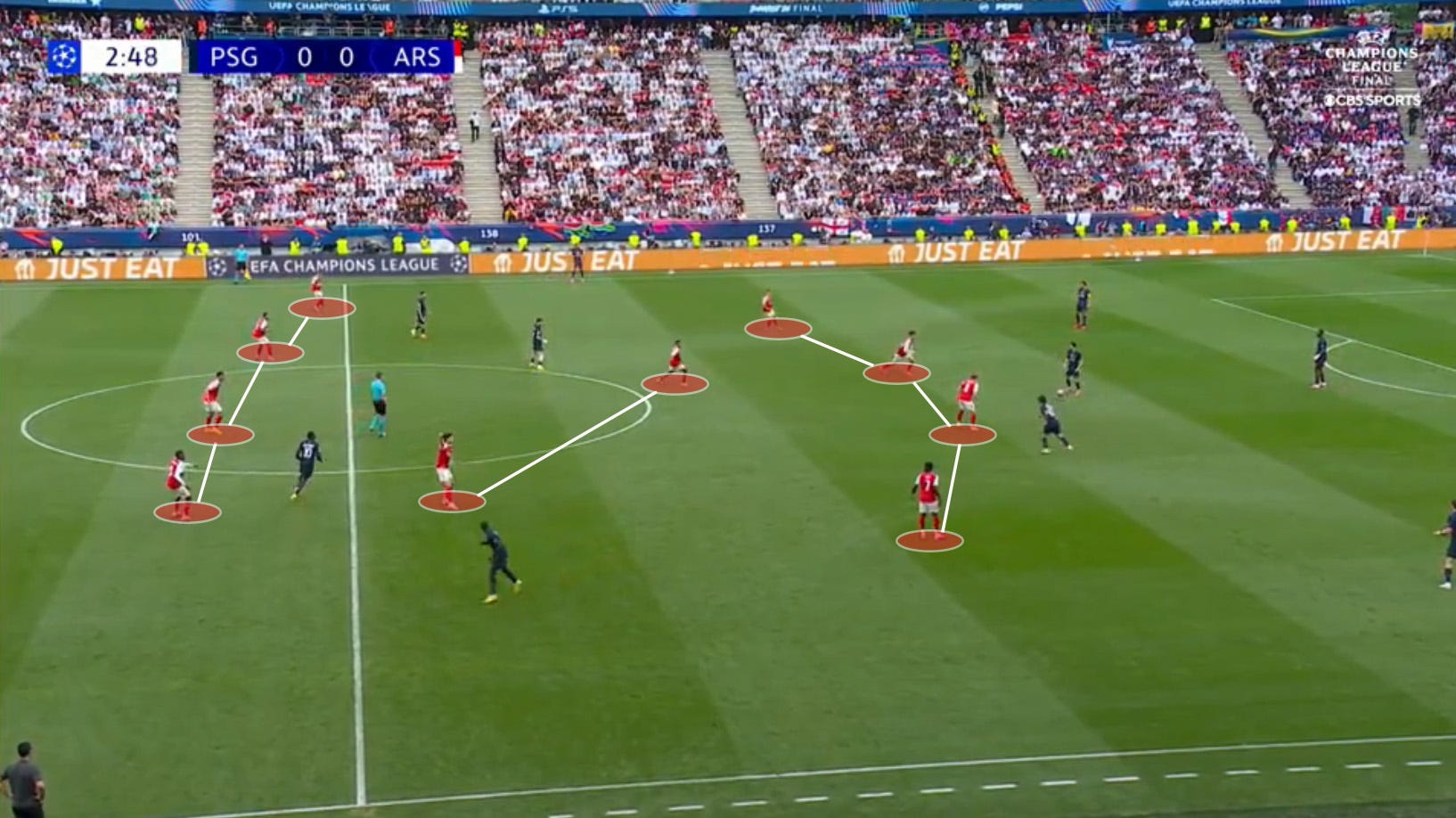
PSG was using positional rotations to try and pull Arsenal all over the pitch, but I must say, Aretea had a well-prepared plan on how to deal with it. Arsenal stuck to their zonal concepts; the centerbacks wouldn’t jump when PSG’s forwards dropped deep, and the Gunners communicated extremely well, switching when players left their space.
Arsenal got a really fortunate bounce to send Havertz in behind, and he finished emphatically in the roof of the net.
After the opening goal here is the question PSG needed to answer: How are you going to break Arsenal down?
PSG is a team built on ball carrying. It works in modern football because everyone presses man to man. What happens when you face a team that will not let you carry the ball through them, won’t have their centerbacks jumping to create space in behind, and essentially make your positional rotations useless?
Can you suddenly flip a switch and start trying to send in crosses or take advantage of set piece opportunities?
PSG was trying so hard to create passing combinations to pull Arsenal’s back line out of positon to create space in behind, but Arsenal was not allowing it to happen.
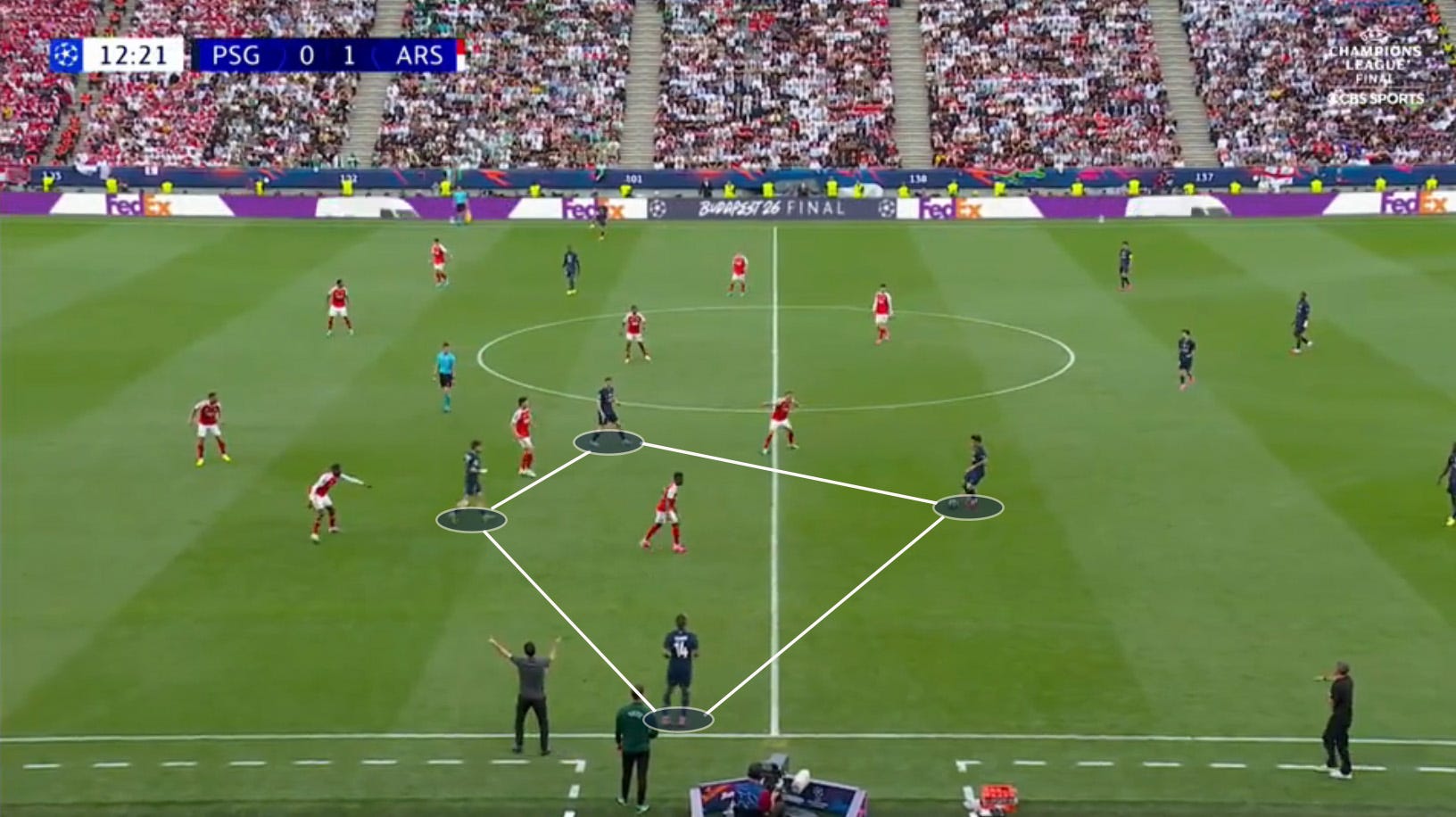
They would have much rather been overloaded in the second phase then give PSG any room to play balls in behind.
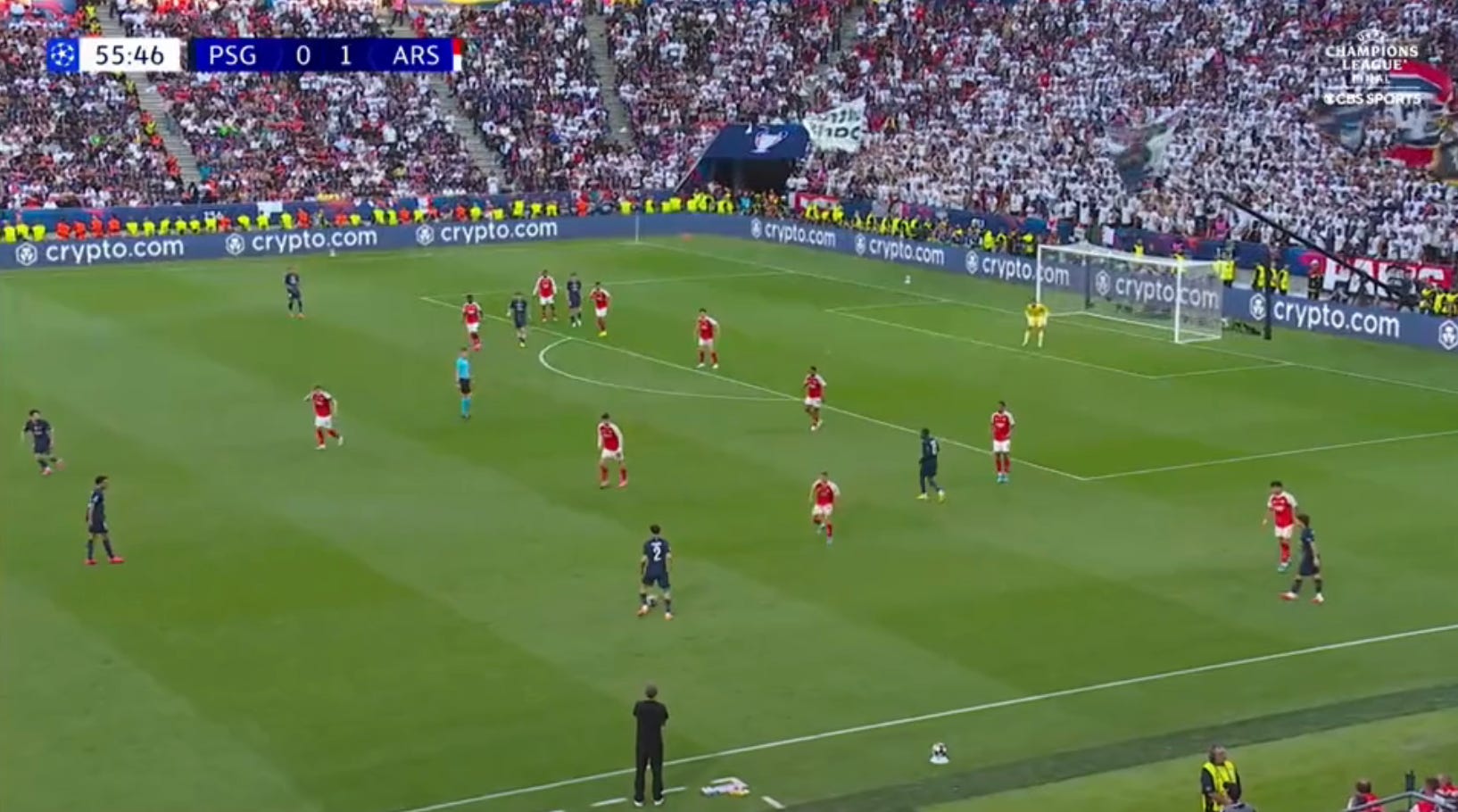
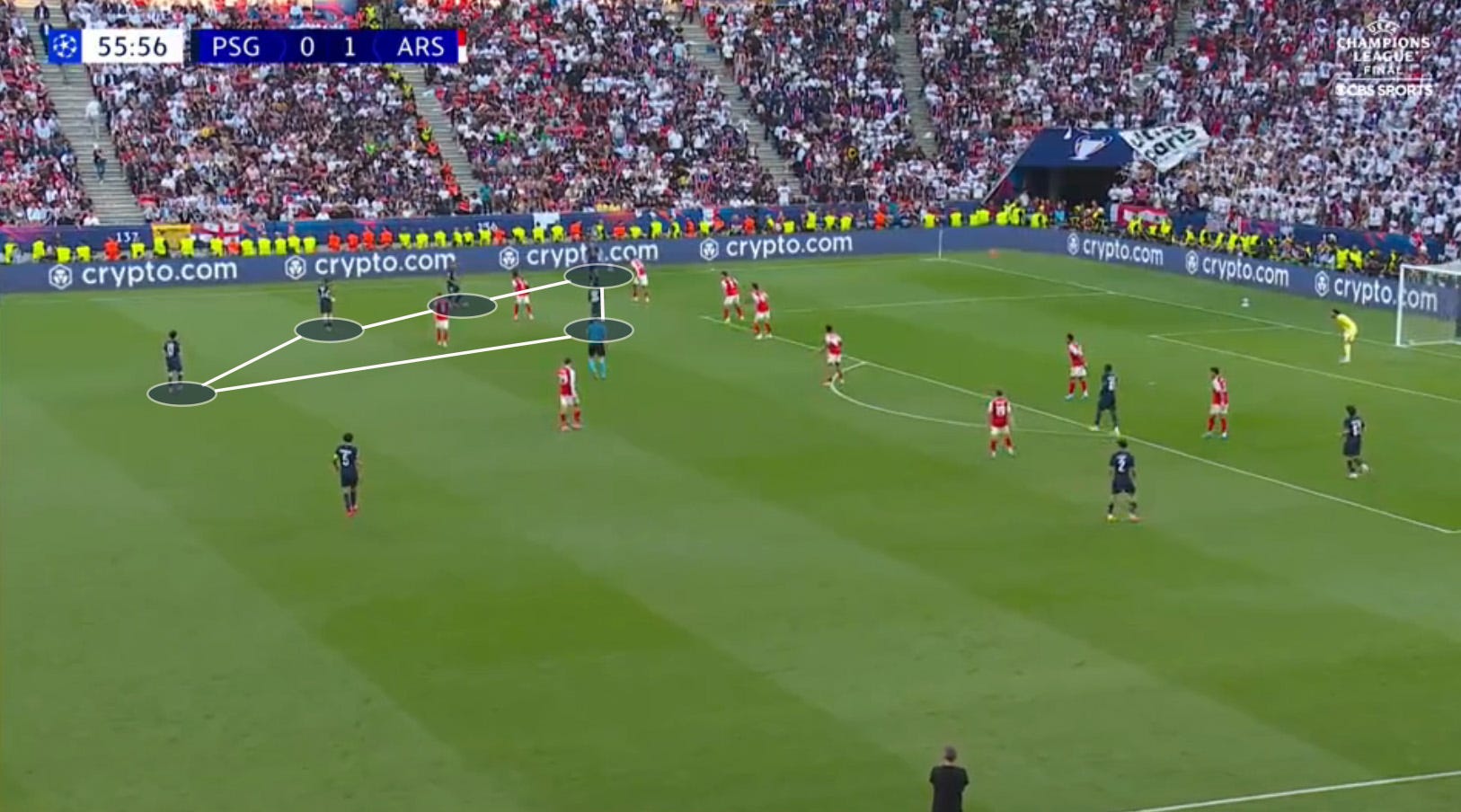
Here is a good example of that. Mendes has the ball wide and Kvaratskhelia drops into receive the ball. If they were playing Bayern Munich, Mosquera would have followed him, which would have created space for Mendes to run in behind.s
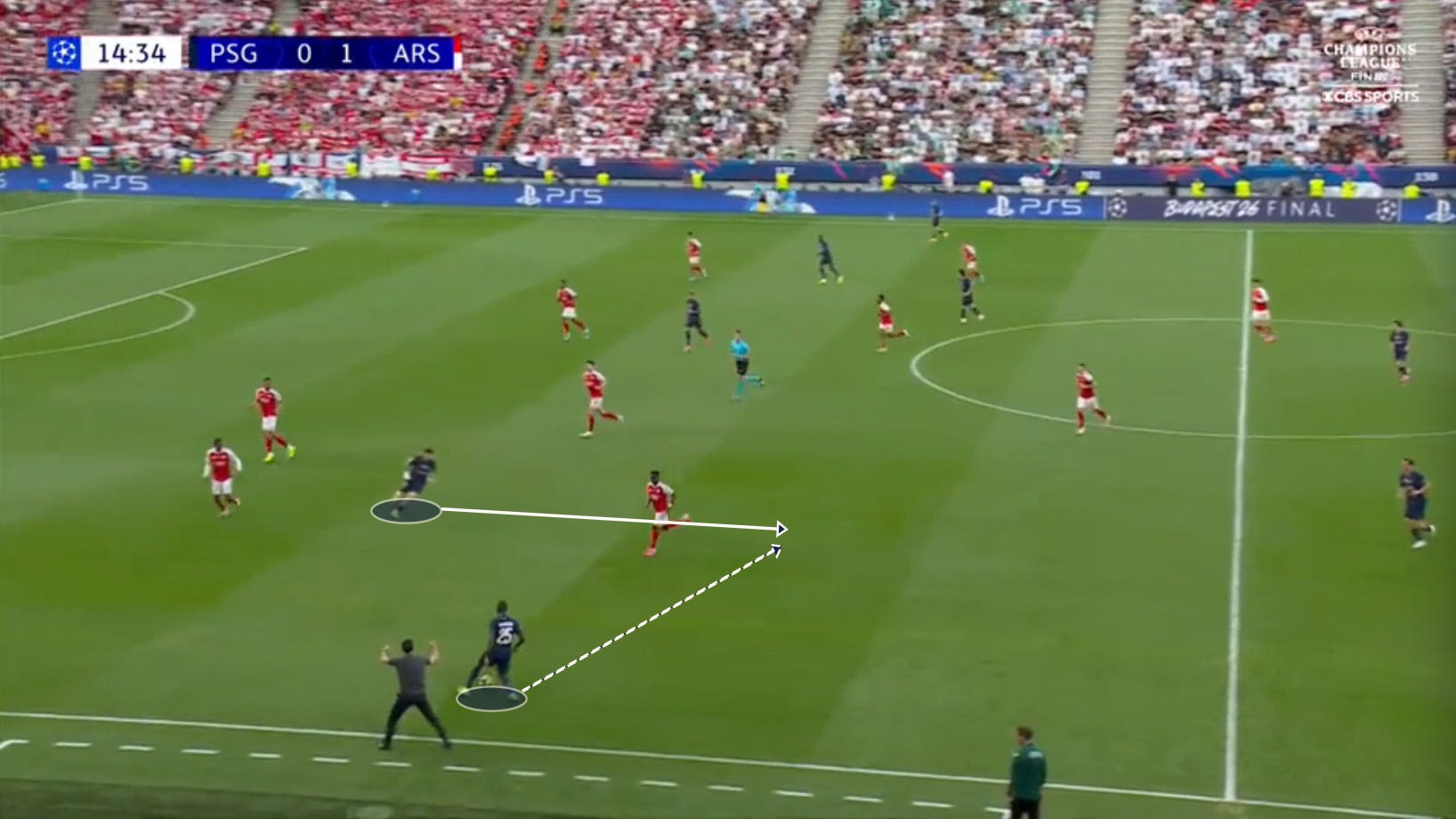
Instead, Mosquera let’s him go receive the ball and simply switches with Saka.
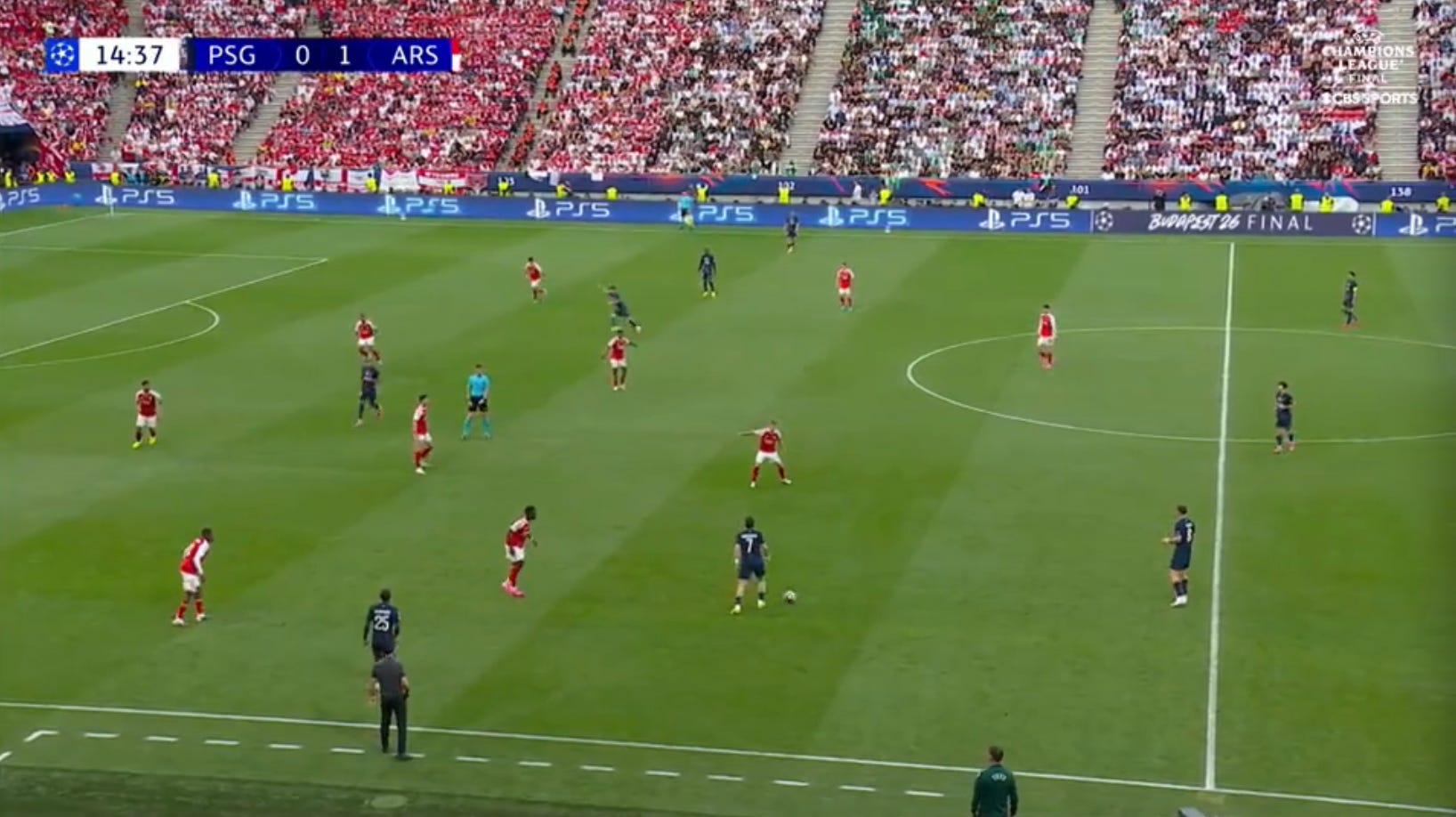
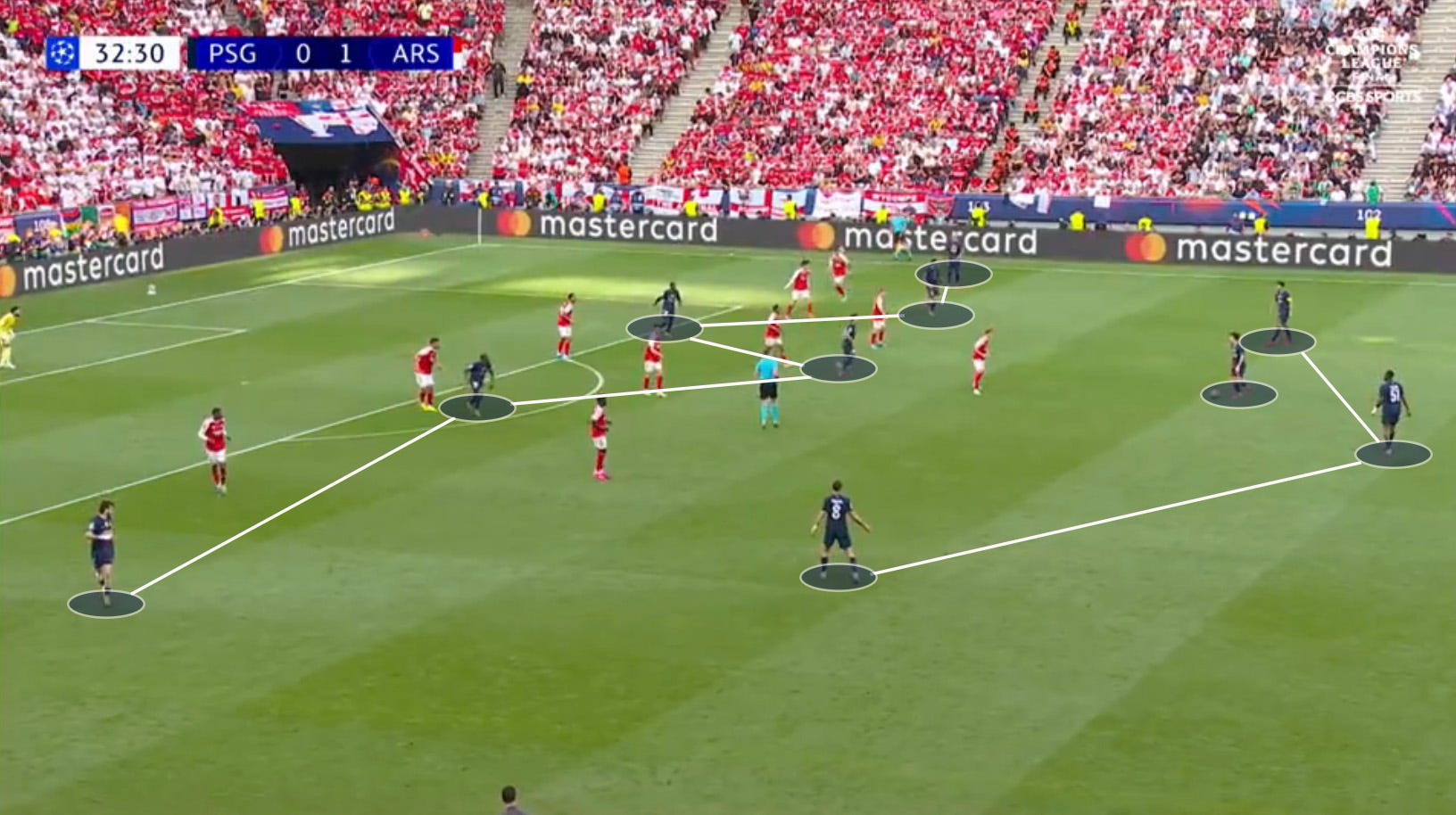
PSG obviously spent a ton of time in Arsenal’s final third of the pitch. What the match basically became was Enrique’s side buildup in a 3-1-6 with Vitinha as the single pivot with Arsenal sitting in a very compact and well structured 4-4-2.
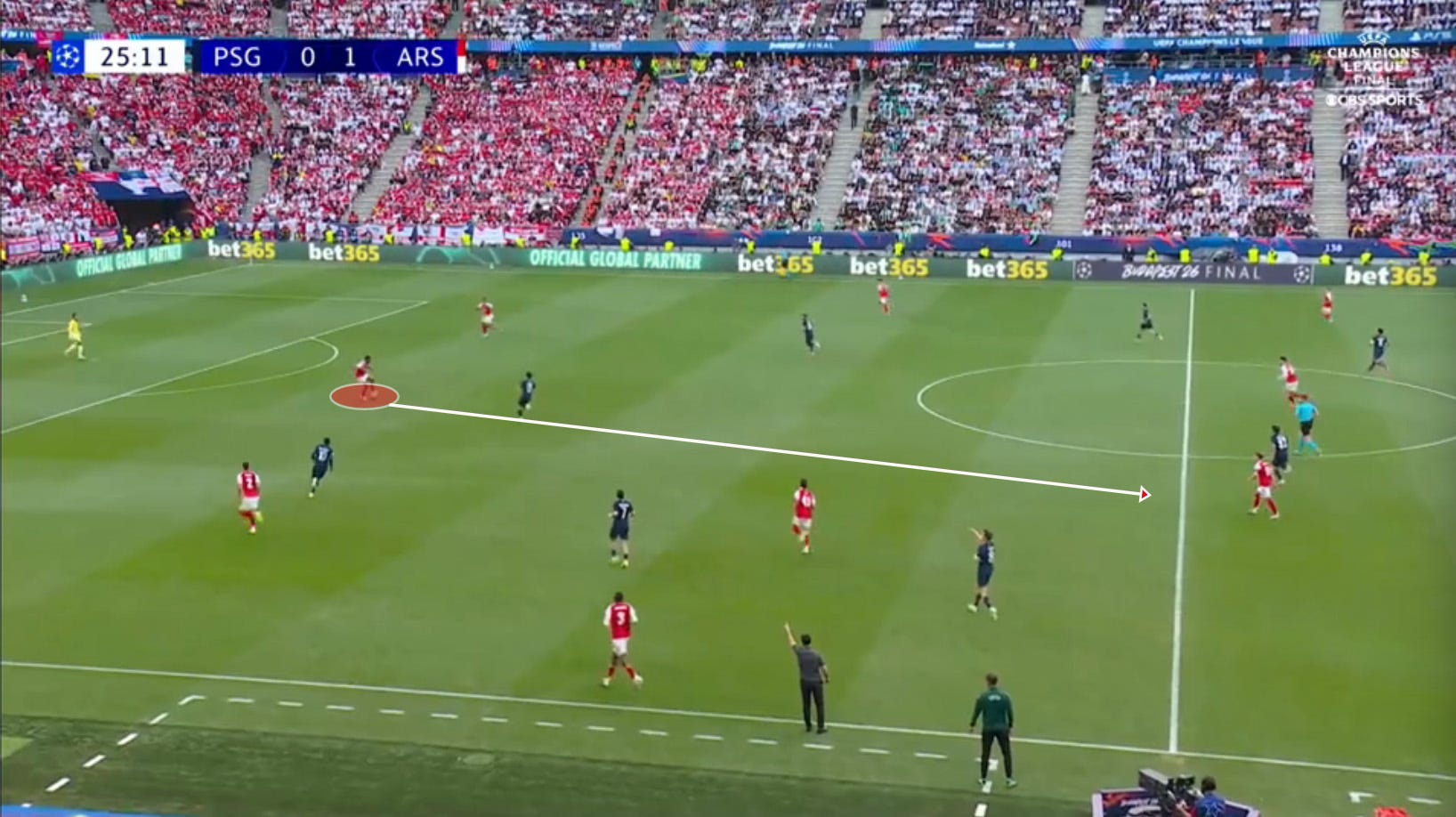
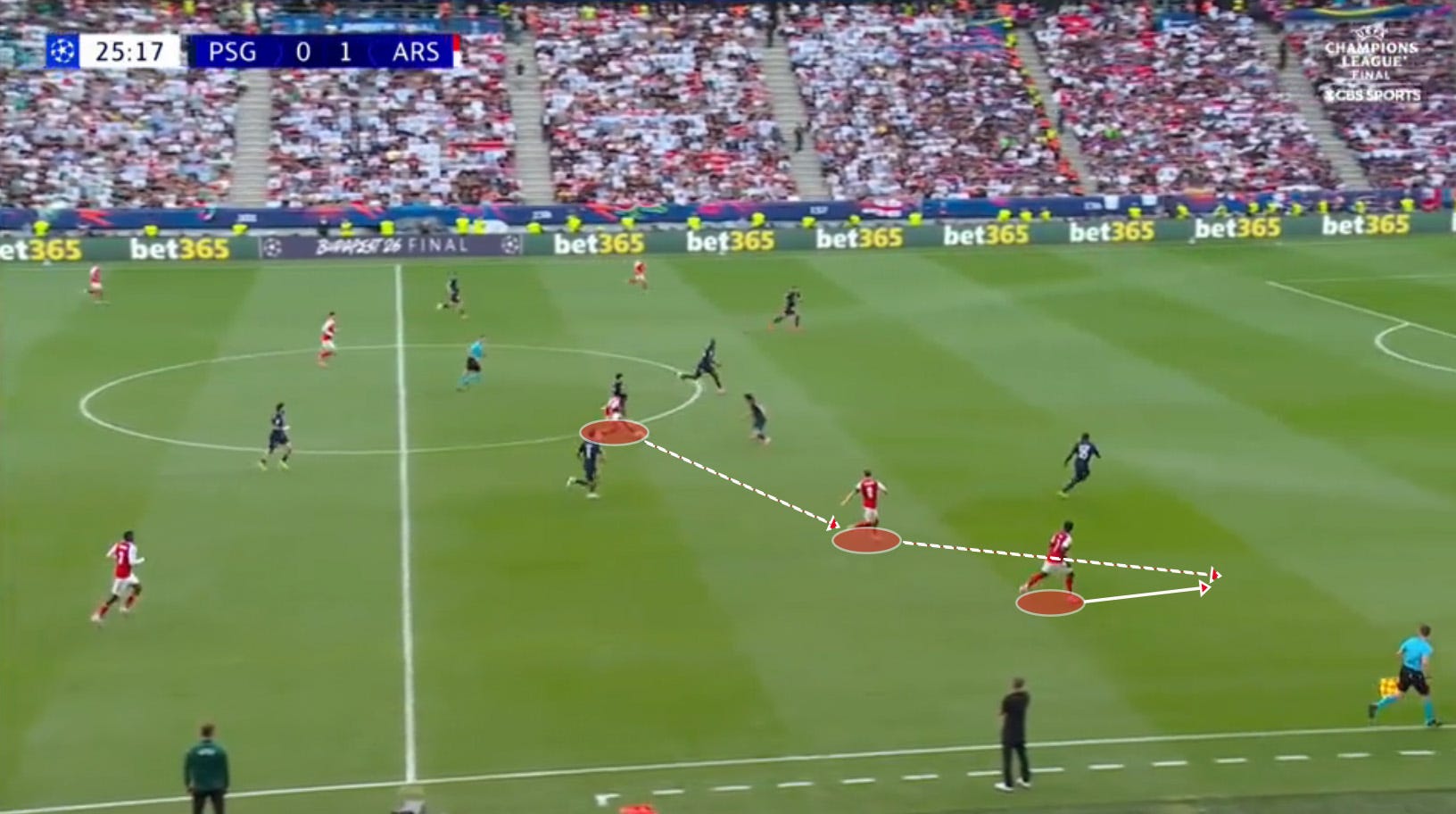
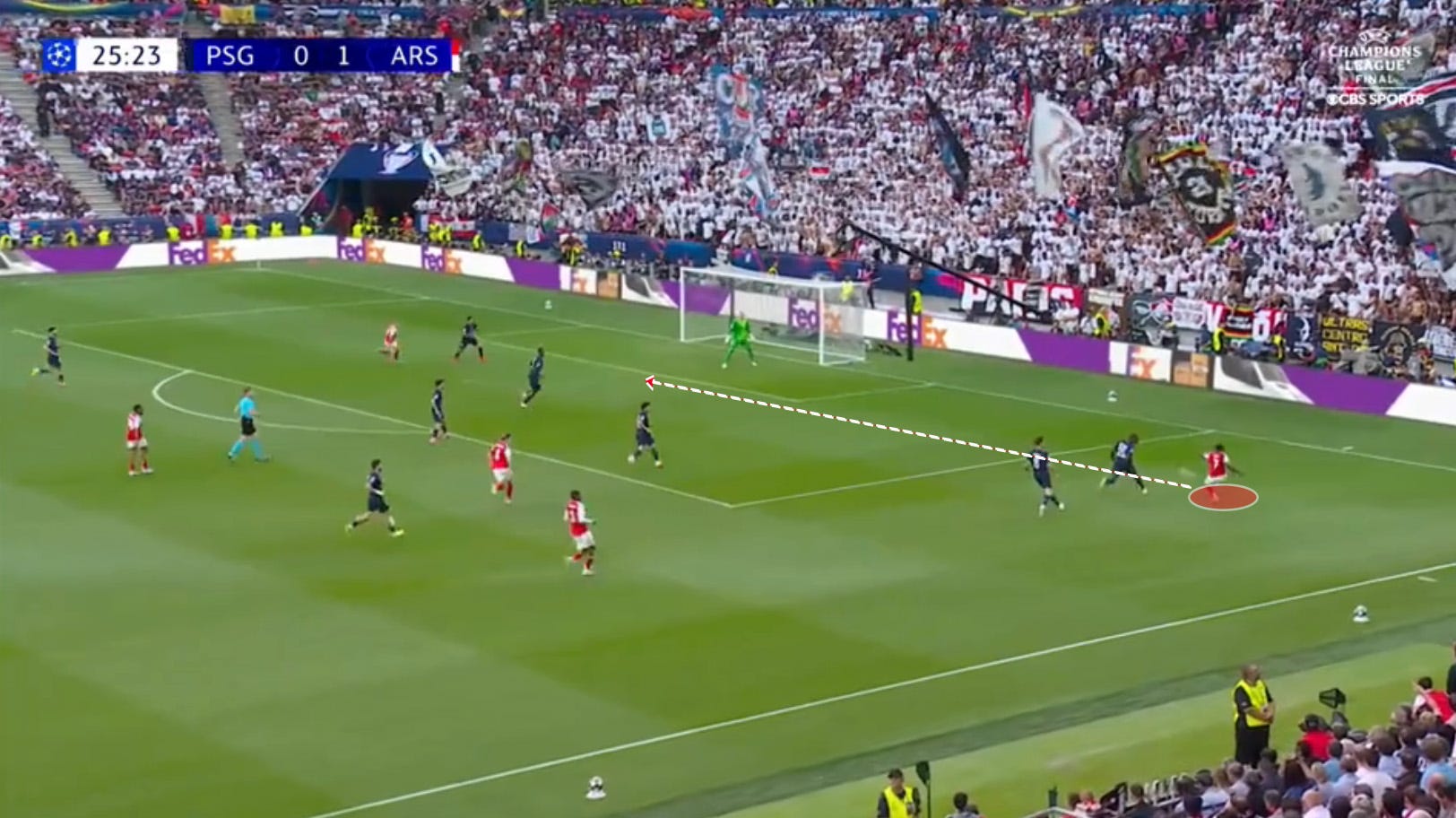
The way to open up PSG is try and carry the ball through them or win duels with long balls from the back. Arsenal was having no luck with long balls, so here Myles Lewis-Skelly dribbled past his defender, which set up a really dangerous cross into the box. It would have been nice to see more of this from Arsenal over the course of the match.
For the remainder of the first half, PSG kept trying to use their positional rotations to find pockets of space in the center of Arsenal’s 4-4-2, but they couldn’t find their way through. They didn’t really make many attempts to overload the wide areas, as Enrique wanted them to play through the middle.
These were all of PSG’s successful passes in the first half, as you can see, nothing was completed in Zone 14 right above the 18 yard box or in the penalty area for that matter.
PSG First Half Successful Passes
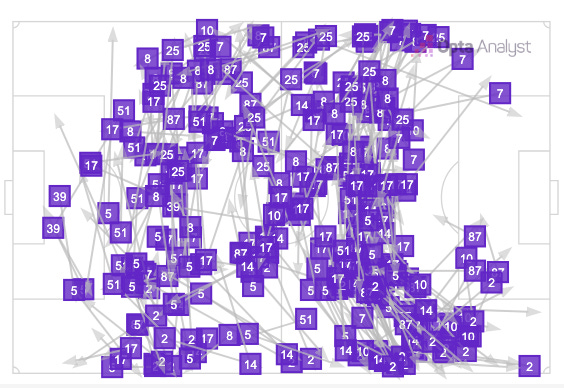
image via Opta the Analyst
PSG ended the first half with 77% possession, almost 250 more passes than Arsenal, but only six shots and 0.26 xG to show for it.
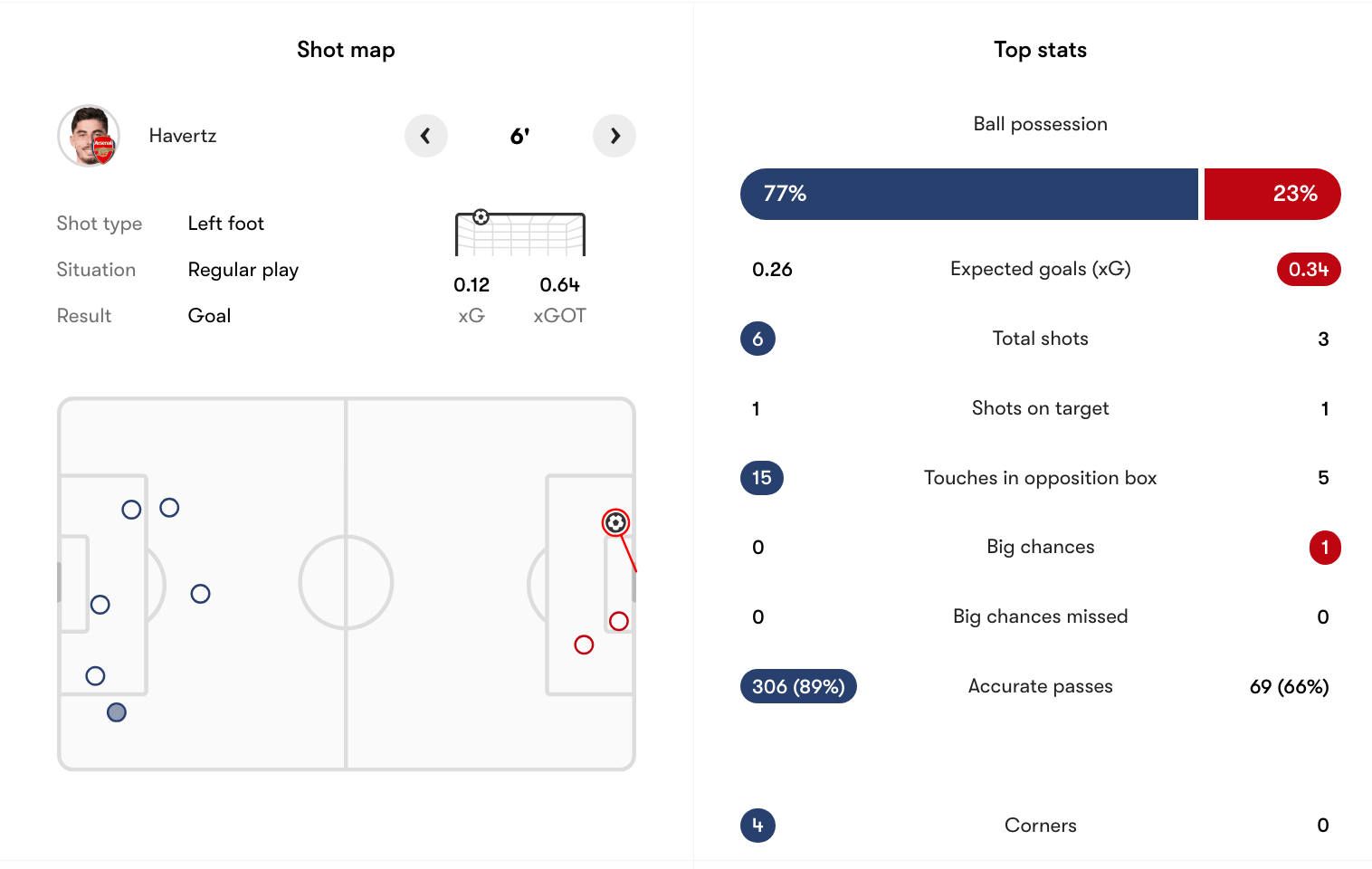
image via FotMob
Second Half
One interesting change out of the gates from Arteta was switching Arsenal to more of a man to man concept. I am sure he knew Enrique would have devised a plan to attack Arsenal’s 4-2-4 at the break, so Arteta tried to give PSG a different look. Specifically, Myles-Lewis Skelly was tasked with following Vitinha.
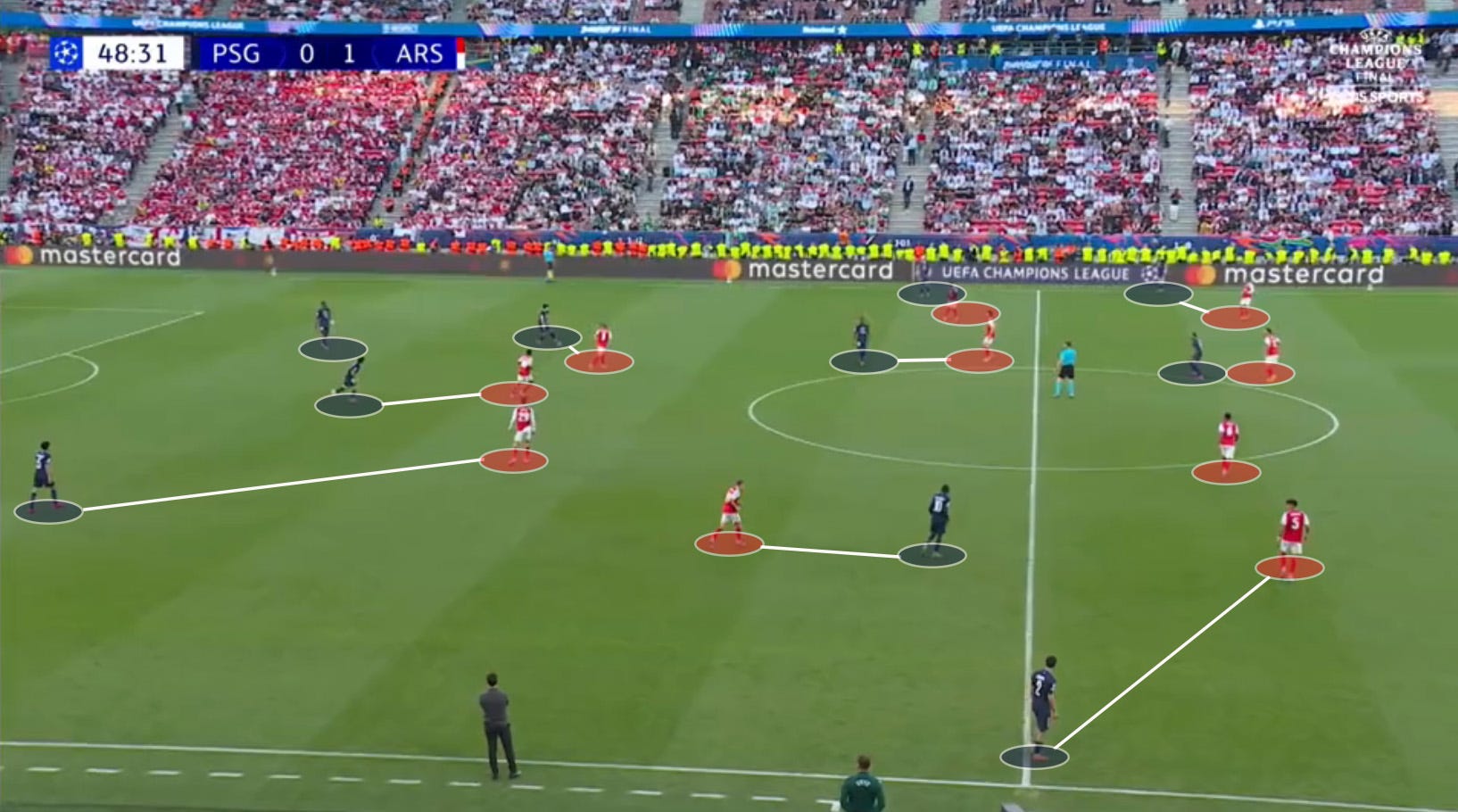
Once PSG recognized it, they tried dribbling past Arsenal any moment they got, but Arsenal did a really nice job with their switch to nullify any type of chance created from those carries.
When you face really compact low blocks, you have to move the ball quickly from side to side to either open up space centrally or create a wide overload on the opposite end of the pitch when the ball gets switched.
PSG was not quick enough with these types of ball rotations and Arsenal was comfortably able to keep everything in front of them.
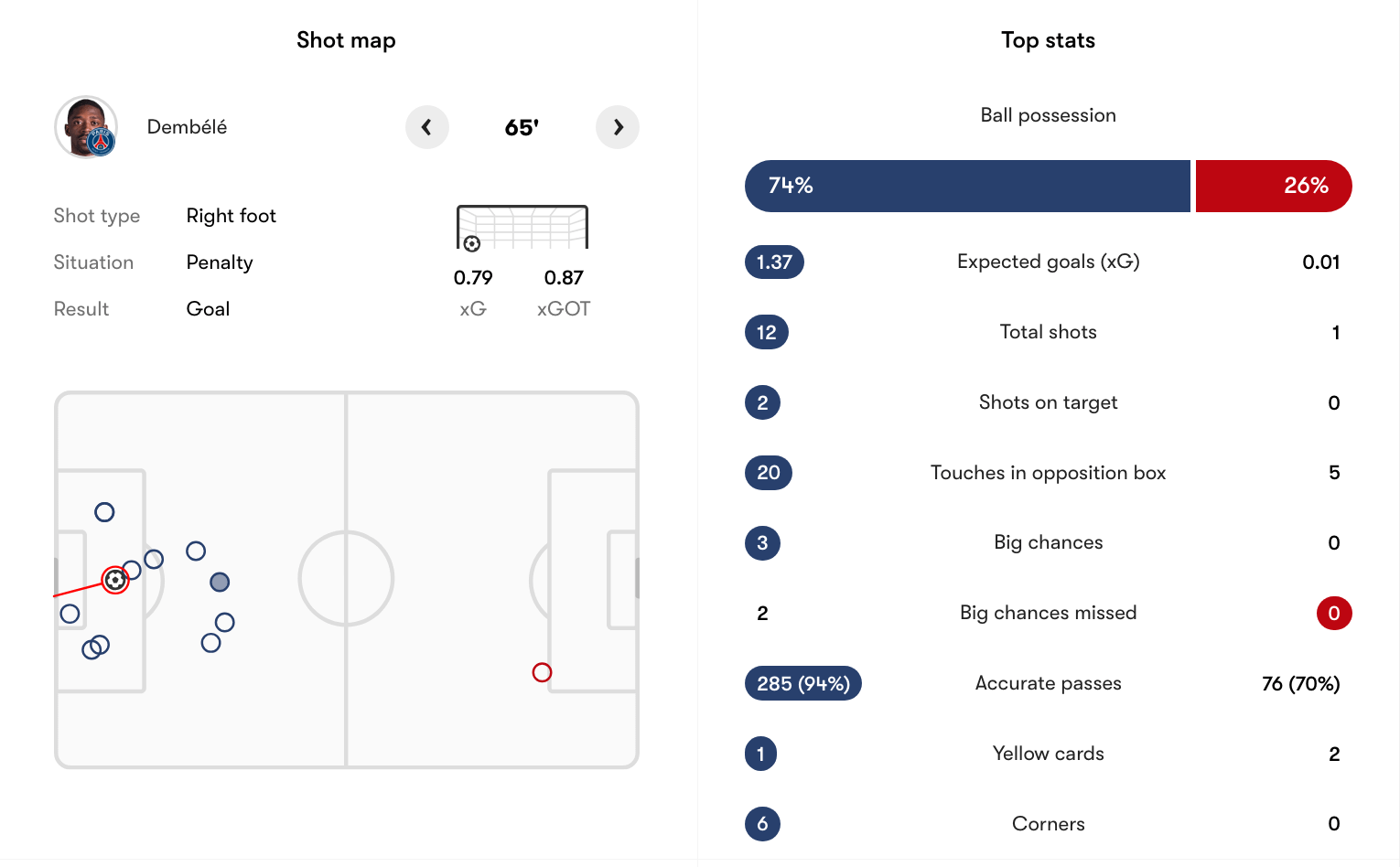
Mosquera gave away a penalty to Kvaratskhelia, which bailed PSG out because they were getting really frustrated. Dembele slotted it home to make it 1-1.
One of the few mistakes from Arsenal almost gave PSG the lead. Saliba misplays the header after a corner, which frees up Kvaratskhelia to break on goal and ends up hitting the post.
For the entire second half, Arsenal had no interest in trying to play out from the back. They were trying to rely on winning duels and second balls, which really wasn’t that successful.
For the match, David Raya only had two short passes and was only 9 for 35 on his long balls, which is a big reason why PSG were able to control so much possession.

image via FotMob
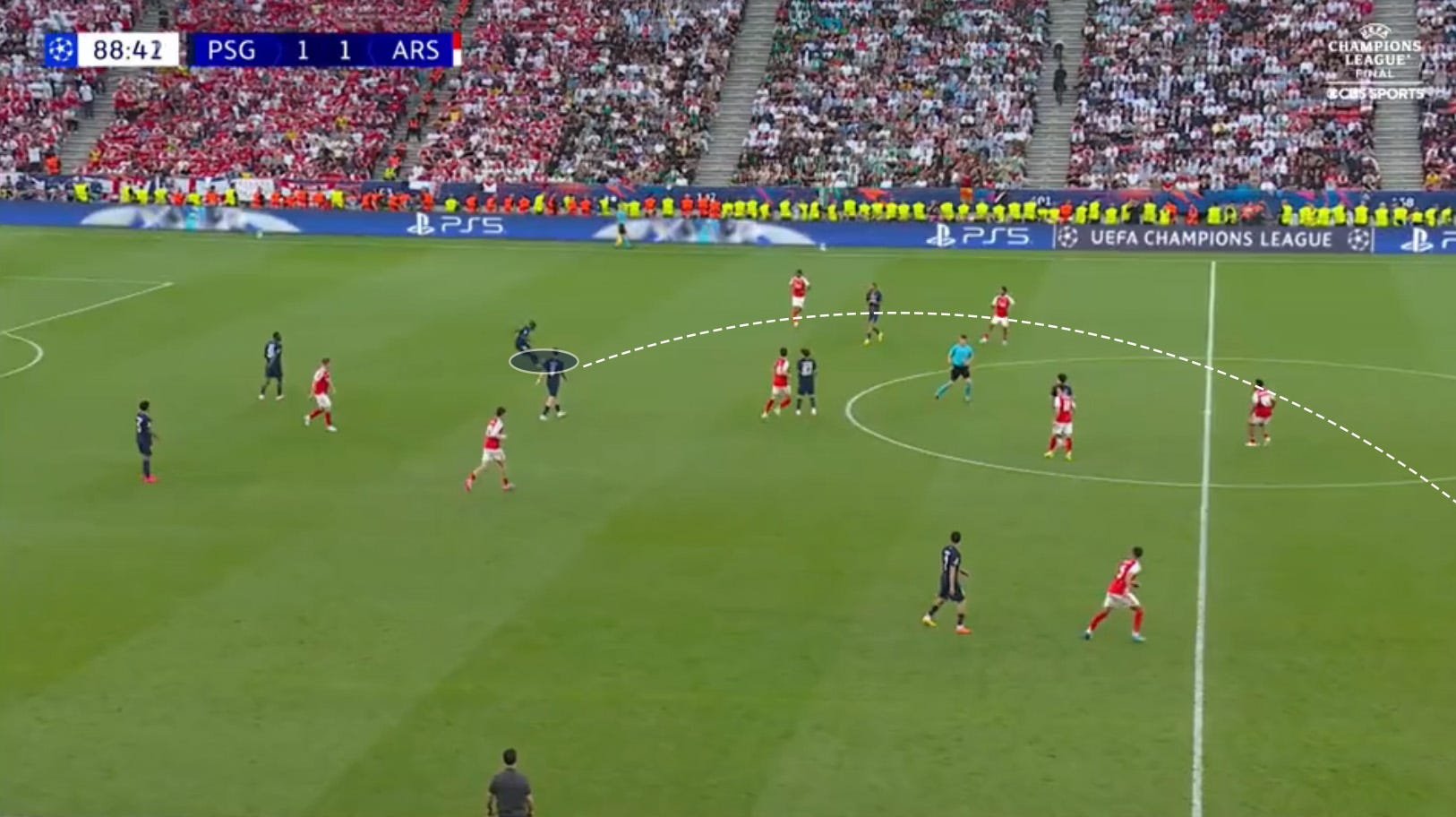
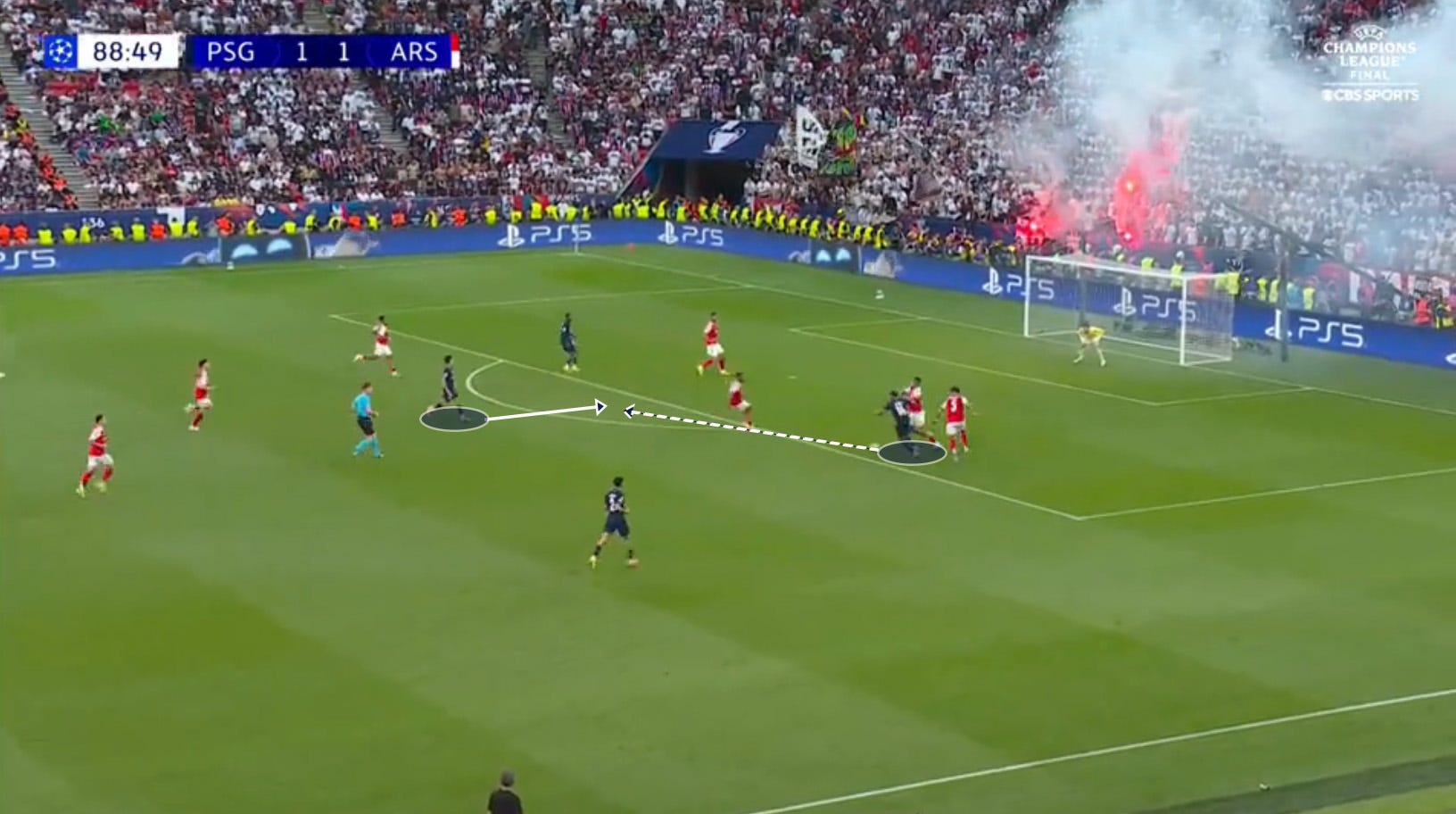
PSG really need to use more switch balls throughout this match. Here the second PSG wins the ball, Mendes finds Doue in space and he is able to set up Vitinha for a dangerous shot at the top of the 18 yard box.
The second half ended with PSG completely dominating the ball. They outshot Arsenal in that 45 minutes 12 to 1, but still struggled to create chances because they only were able to muster 0.41 xG from open play.
Extra Time First Half
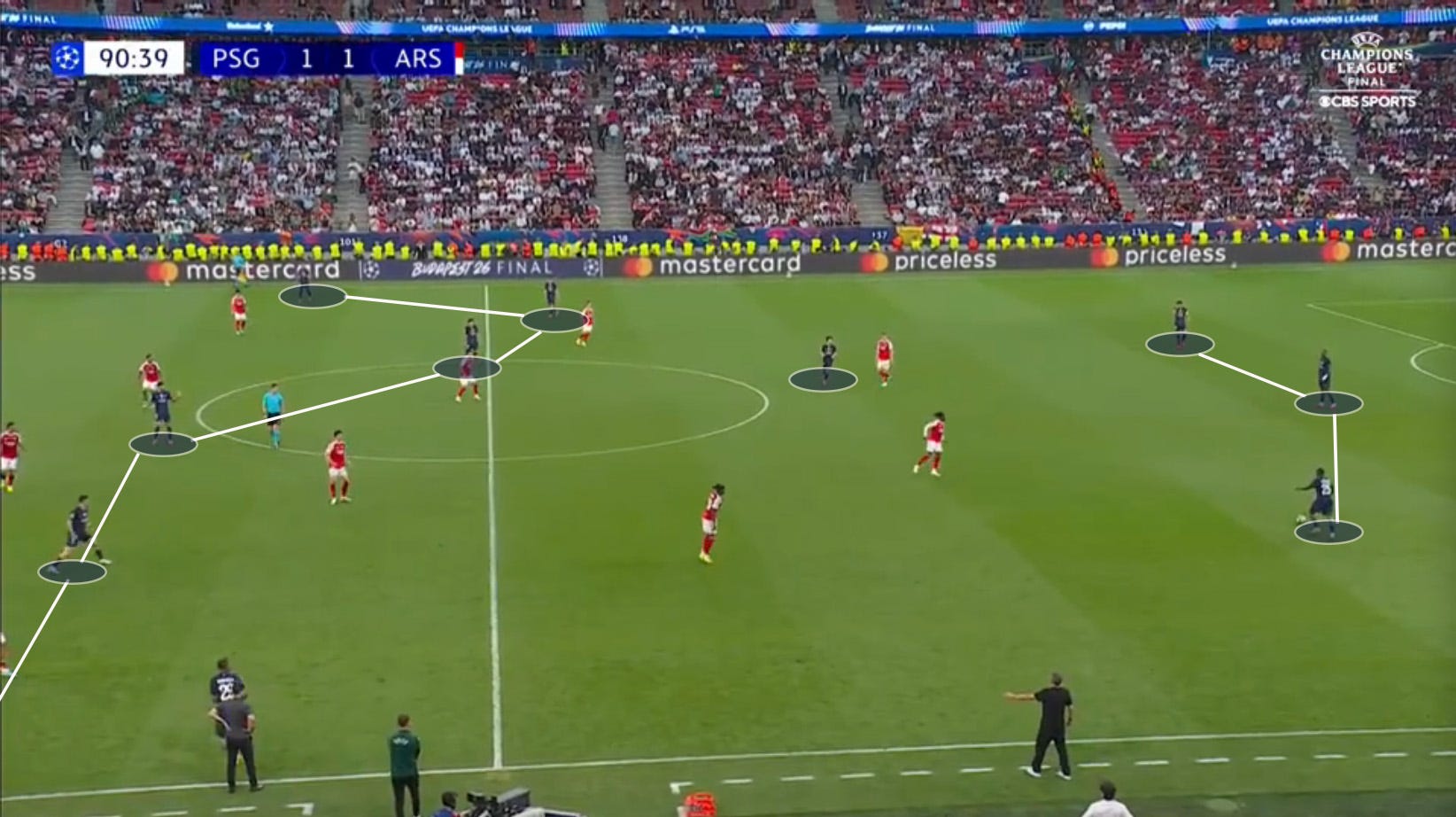
PSG maintained their 3-1-6 build up structure, which forced Arsenal’s two wide midfielders to drop a little deeper, creating a 4 v 2 in the first phase of build up for PSG. This is one of the reasons why they were able to hold such a high amount of possession.
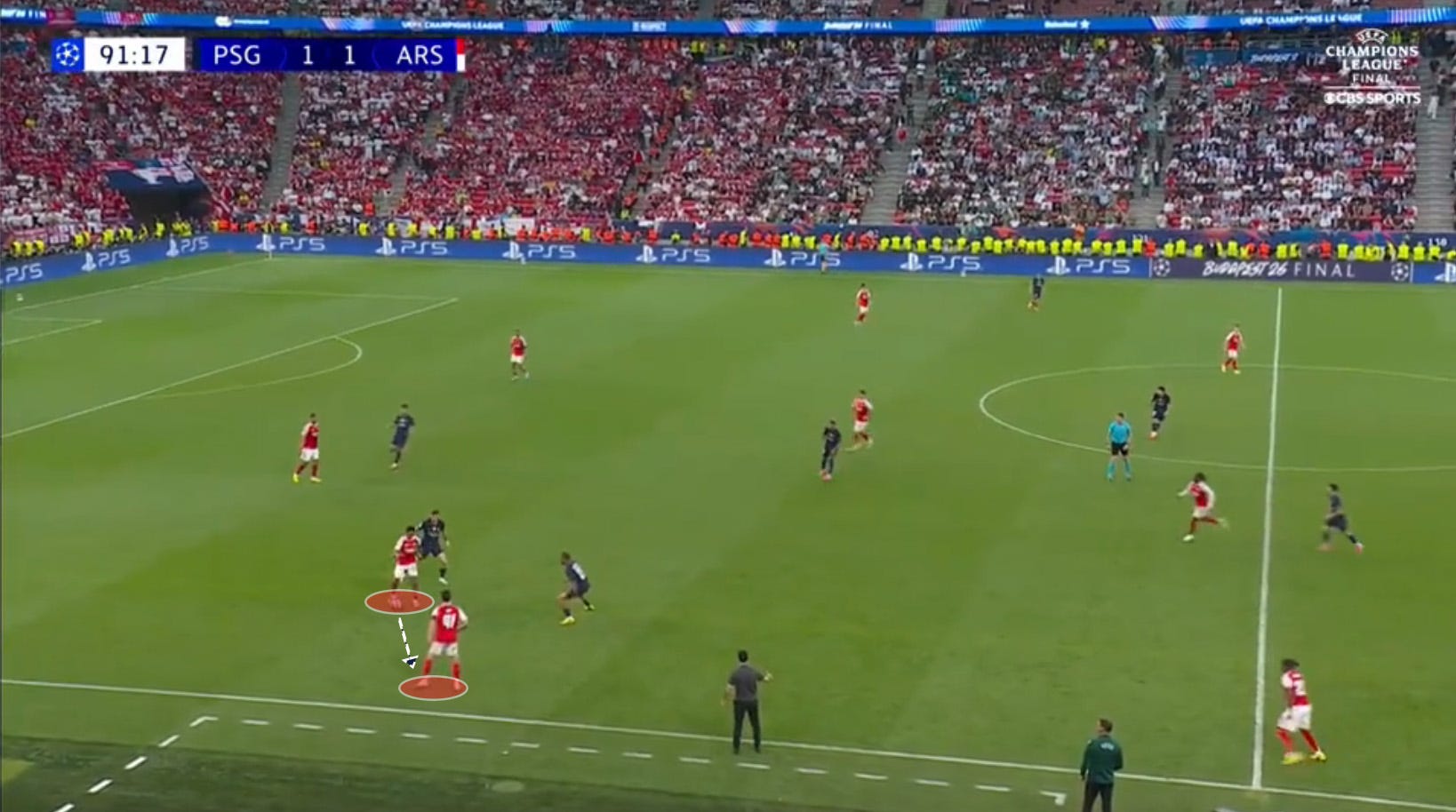
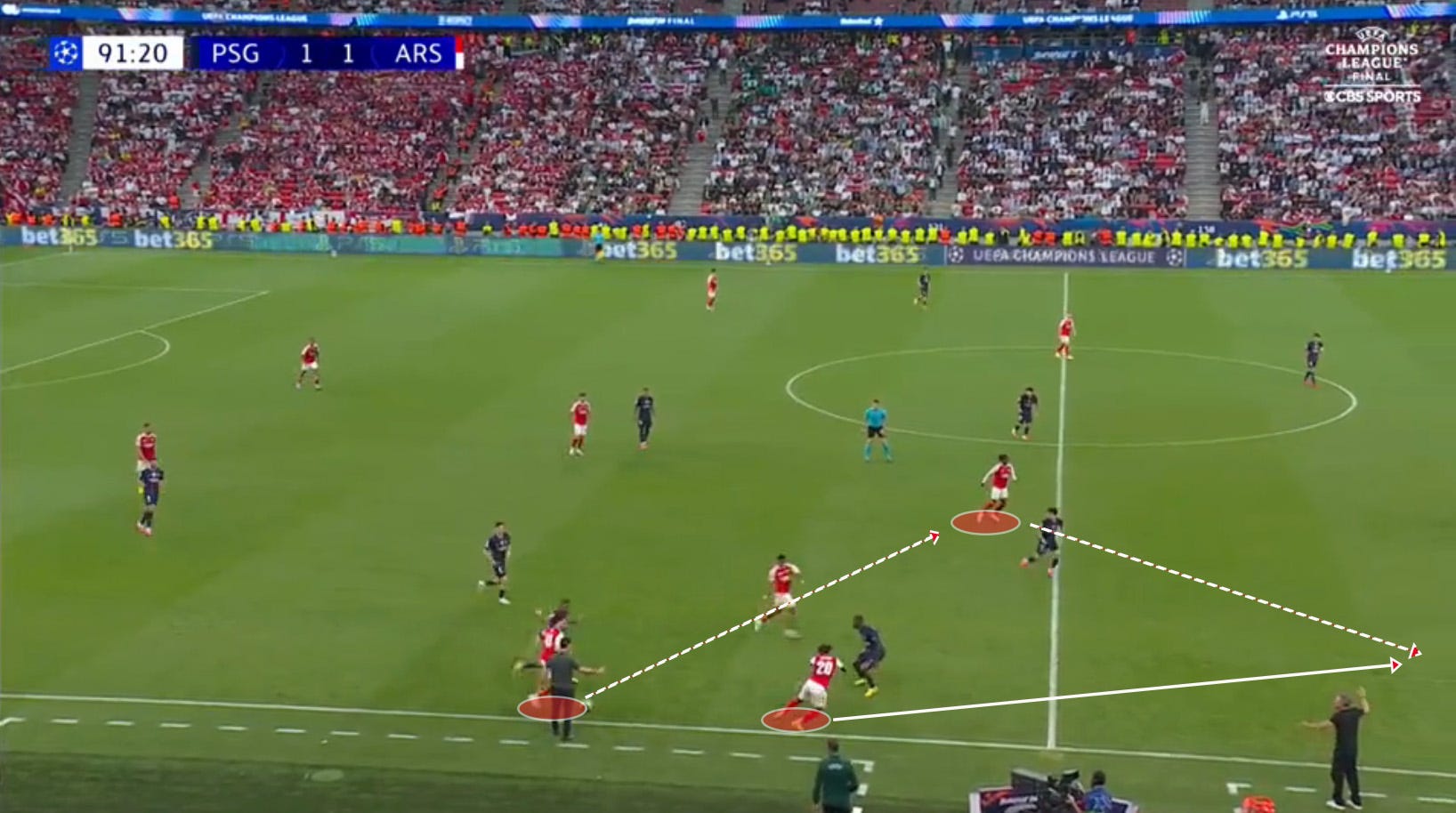
Arsenal was way too conservative for most of this match and really needed more moments like this. Rice is able to beat his man, which creates a 4 v 3 situation out wide.
He found Eze in the half space, who released Madueke in behind to set up a dangerous cross into the box that PSG had to deal with.
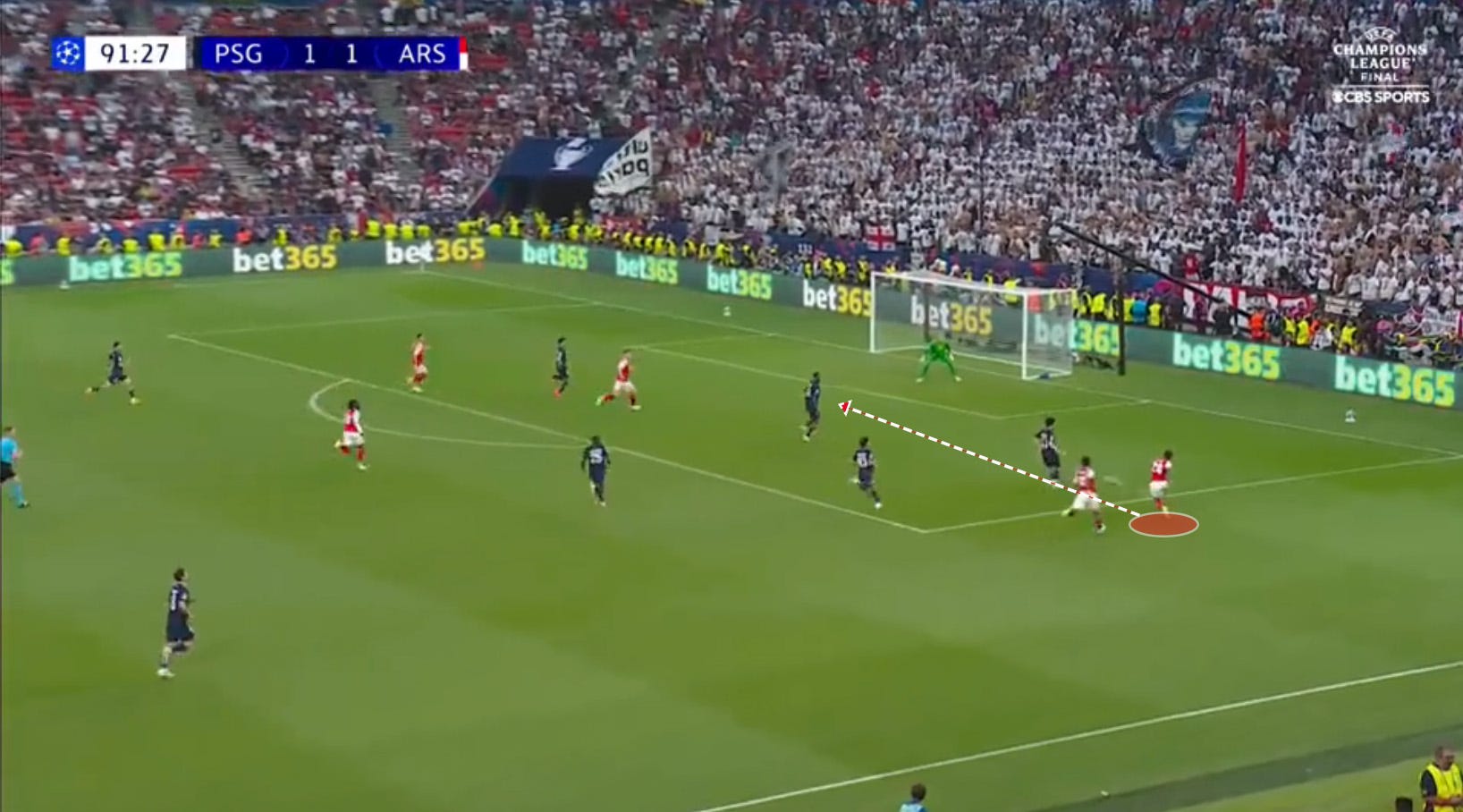
Arsenal had a penalty claim on Madueke, but (even as an Arsenal fan I can admit) it was never a penalty.
There really wasn’t much happening in the first half of extra time with a Hakimi shot from outside the box being the only attempt.
Extra Time Second Half
Vitinha was injured at the end of the first half of extra time, which meant Enrique had to make some tactical changes.
Instead of using Lucas Beraldo as the single pivot, Hakimi inverted into the midfield, which meant PSG was now in a 3-2-5, as opposed to a 3-1-6.
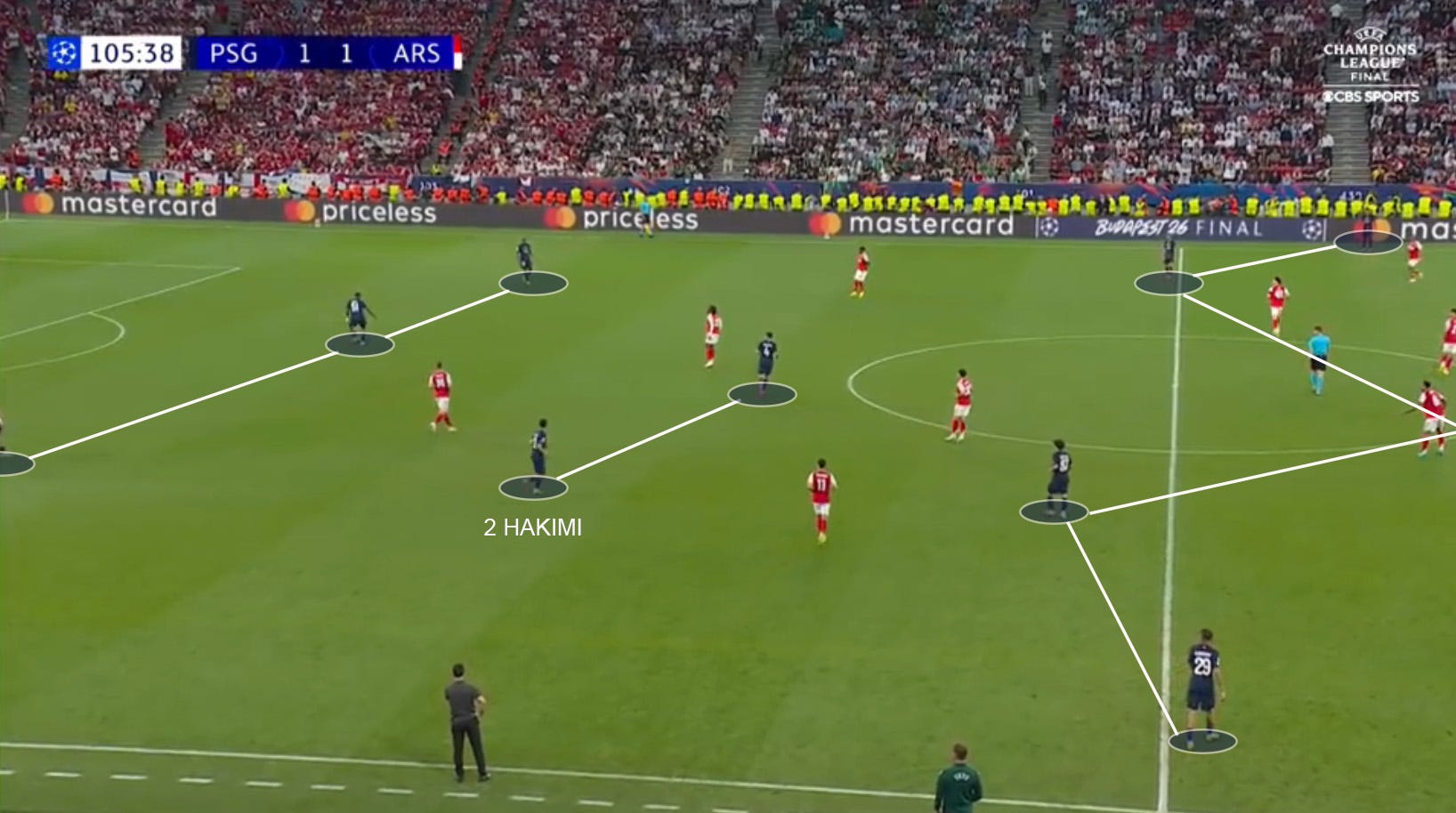
PSG struggled to break Arsenal down for the final 15 minutes and to be honest, both teams looked exhausted, so there really weren’t many chances for either side.
PSG went on to win the penalty shootout to keep the Champions League trophy in Paris.
Conclusion
The early goal from Arsenal turned this match into a cagey affair and a tough watch for the neutral.
The question is would Arsenal have defended that deep and played that conservative if they hadn’t scored in the sixth minute? I don’t think so.
Arteta would have picked his moments, but there is no way he was coming to Budapest with the plan of handing PSG 74% of the ball. He only did that because they scored early and it allowed them go to one of the two extremes you have to play against PSG.
Enrique’s side forces you to either press them high with insane intensity (which is what Arsenal did in the semifinals last year and were successful) or you have to sit in the lowest, most compact block to try and frustrate them.
Arsenal chose option two and I have to say it worked.
You can look at these passing stats and think PSG completely dominated this match and the did simply from a control standpoint.
PSG vs. Arsenal Passing Stats
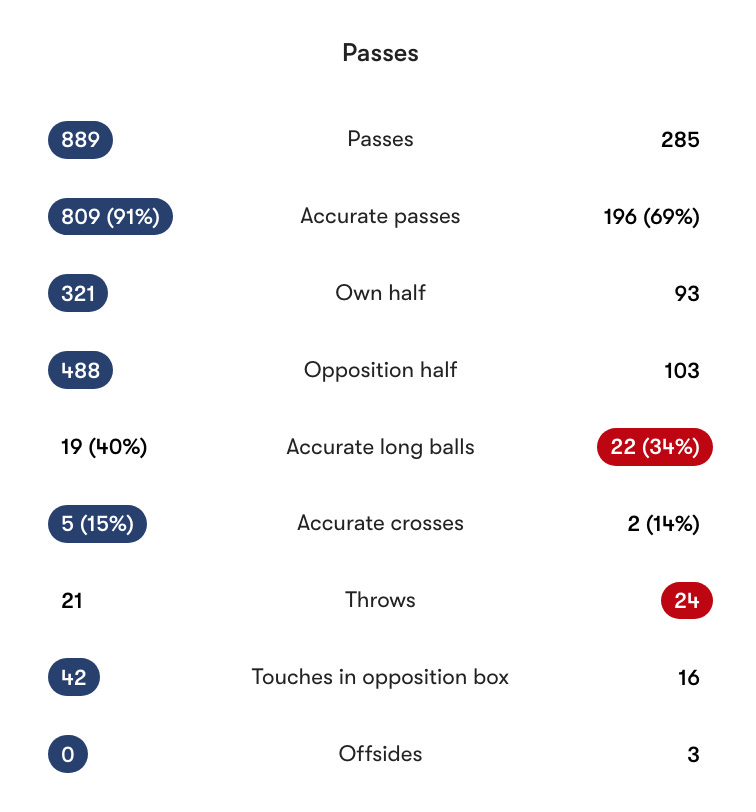
image via FotMob
However, If you take away the penalty and the three fast break chances, PSG only created 0.48 xG against Arsenal’s low block for 120 minutes.
They completely shut down all of PSG’s forwards from carrying the ball past them or into dangerous positions as well. Dembélé, Doué, Kvaratskhelia, Barcola combined for only three successful dribbles out of 10 attempts.
Most spectators will find that match quite boring, but it was a beautiful match between a knockout artist and a boxer.
Arsenal came up short in the end, but they gave everything and then some to shut down PSG.
As an Arsenal fan, this one hurts and Gabriel’s missed penalty immediately is up there, as one of my worst heartbreaks as a fan. It hurts because Arsenal didn’t blow it, they went toe to toe with the European Champions and they never lost a match during this Champions League run.
This one will sting for a while, but Arsenal will be back on this stage again. The Gunners are not going anywhere.